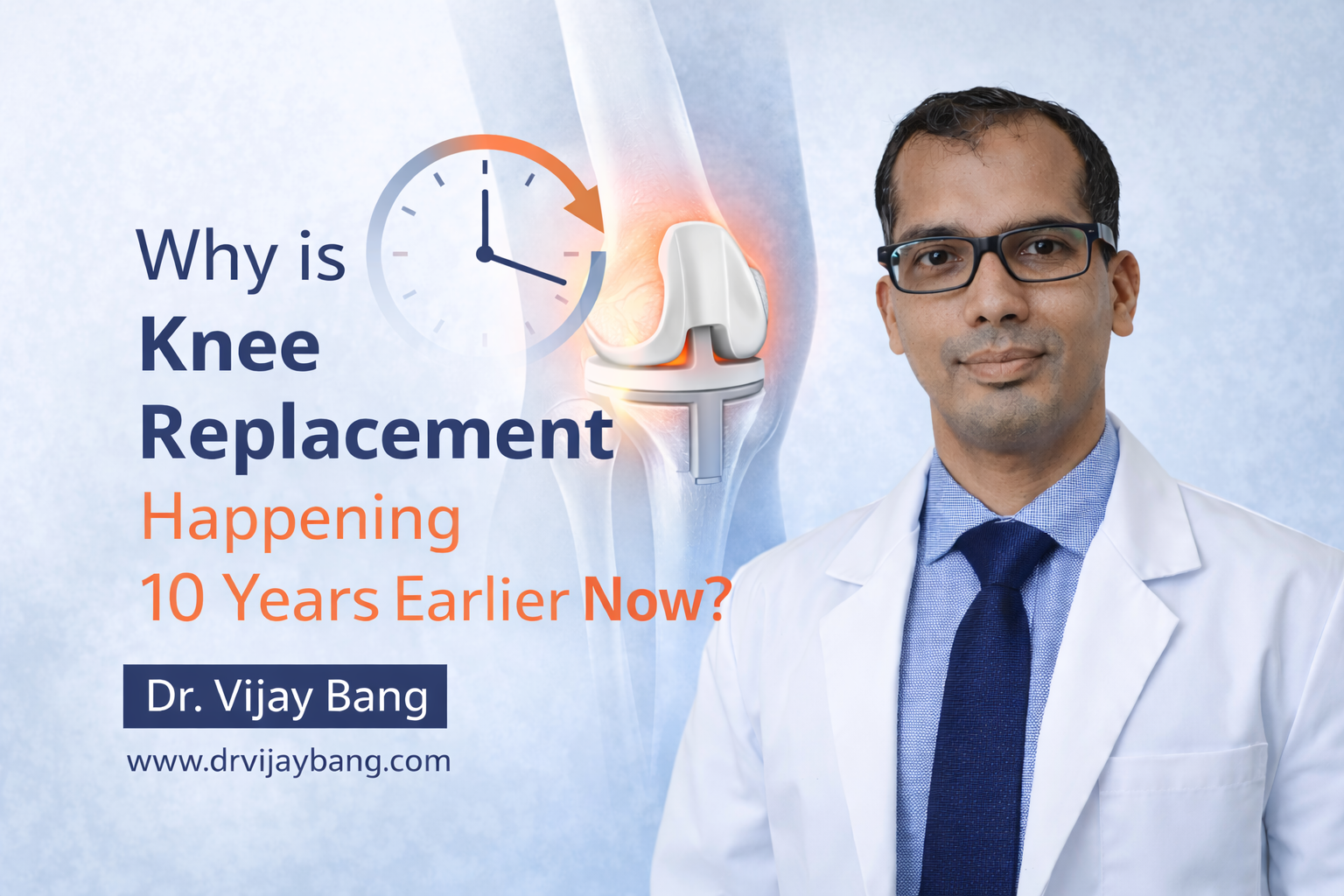
Over the past decade, orthopaedic surgeons across India and globally have noticed a clear shift: knee replacement surgery is no longer limited to patients in their late 60s or 70s. Increasingly, patients in their late 40s and 50s are being evaluated — and sometimes operated — for advanced knee arthritis.
This raises an important question:
Why is knee replacement happening 10 years earlier now?
Is it lifestyle? Obesity? Gym culture? Sports injuries? Or are we simply diagnosing arthritis earlier?
The answer is multifactorial. Let’s examine the real reasons behind this trend, what it means for patients, and whether early knee replacement is always necessary.
Understanding Knee Replacement
Knee replacement surgery (total knee arthroplasty) is a procedure in which damaged cartilage and worn-out joint surfaces are replaced with artificial components. It is typically performed for:
- Advanced osteoarthritis
- Rheumatoid arthritis
- Post-traumatic arthritis
- Severe cartilage loss
Traditionally, knee replacement was considered a surgery for elderly patients with end-stage arthritis. Today, that age boundary is shifting.
The Changing Age Profile of Knee Arthritis
Earlier generations had:
- More physically active daily routines
- Less obesity
- Fewer processed foods
- Less sedentary screen time
Today’s population faces very different environmental and lifestyle factors that are accelerating joint degeneration.
Let’s examine the major contributors.
1. Rising Obesity and Weight Gain
One of the strongest risk factors for early knee arthritis is obesity.
Every additional kilogram of body weight places approximately 3–4 times more force across the knee joint during walking. Over time, this increased load accelerates cartilage wear.
Modern factors contributing to obesity include:
- Sedentary jobs
- Long sitting hours
- High-calorie diets
- Reduced outdoor activity
- Urban lifestyle changes
Excess body weight doesn’t just increase mechanical load — it also promotes inflammation in the body, which further damages cartilage.
As obesity rises in younger populations, arthritis begins earlier.
2. Sedentary Lifestyle and Muscle Weakness
Ironically, both excessive strain and insufficient movement damage joints.
Modern sedentary behavior leads to:
- Weak quadriceps muscles
- Poor knee alignment
- Reduced joint support
- Early cartilage breakdown
Strong thigh muscles act as shock absorbers. When muscles are weak, more force directly impacts cartilage.
Many individuals in their 40s today have muscle strength comparable to what 60-year-olds had in previous generations.
3. Increased Sports and Fitness Injuries
Fitness awareness has increased — which is positive — but improper training and high-impact sports have also contributed to early joint damage.
Common contributors include:
- ACL injuries
- Meniscus tears
- Improper gym techniques
- High-impact running on hard surfaces
- Turf injuries
Untreated or poorly rehabilitated ligament injuries can lead to early arthritis.
Post-traumatic arthritis can develop within 5–10 years after a significant knee injury.
4. Delayed Treatment of Knee Pain
Many patients ignore early knee pain and self-medicate with painkillers.
By the time they seek evaluation:
- Cartilage damage is advanced
- Joint deformity has begun
- Conservative options are limited
Delayed intervention often narrows treatment choices.
5. Increased Awareness and Earlier Diagnosis
Not all change is negative.
Advanced imaging and improved awareness mean:
- Arthritis is detected earlier
- Patients are less willing to tolerate chronic pain
- Expectations for active lifestyles are higher
People in their 50s today want to:
- Travel
- Exercise
- Stay socially active
- Maintain independence
Quality-of-life expectations have increased, leading to earlier consideration of surgery.
6. Cultural Sitting Habits
In India, common habits such as:
- Sitting cross-legged
- Squatting
- Using Indian-style toilets
Place high flexion stress on the knee joint.
Repeated deep bending over decades accelerates cartilage wear.
7. Hormonal and Metabolic Factors
Emerging research suggests metabolic factors play a role in cartilage health.
Conditions like:
- Diabetes
- Metabolic syndrome
- Vitamin D deficiency
Are increasingly common and may influence early joint degeneration.
Is Early Knee Replacement Always Necessary?
Not necessarily.
Many patients in their 40s and 50s can delay knee replacement with:
- Weight reduction
- Muscle strengthening
- Activity modification
- Unloader braces
- Injection therapies
Surgery is typically recommended when:
- Pain is severe
- Daily activities are restricted
- Conservative treatments fail
- X-rays show advanced cartilage loss
The decision should not be based on age alone — it should be based on symptoms and joint damage.
Concerns About Early Knee Replacement
Younger patients often ask:
- Will the implant last long enough?
- Will I need revision surgery?
- Is it too early?
Modern knee implants can last 15–25 years depending on usage, weight, and activity levels. However, younger patients are more likely to require revision later in life compared to elderly patients.
Therefore, timing matters.
Can Early Arthritis Be Reversed?
Unfortunately, once cartilage is significantly damaged, it does not regenerate naturally.
However, early-stage arthritis progression can be slowed with:
- Weight loss
- Strength training
- Proper footwear
- Lifestyle modification
Prevention and early management are critical.
Warning Signs of Early Knee Arthritis
Patients in their 40s and 50s should not ignore:
- Pain while climbing stairs
- Knee stiffness in the morning
- Grinding sensation
- Swelling after activity
- Reduced walking distance
Early evaluation can prevent progression.
Psychological Factors
Younger patients struggle more emotionally with the idea of joint replacement. They may:
- Delay surgery despite severe pain
- Fear activity restrictions
- Worry about long-term implant survival
Open discussion and individualized planning are essential.
The Real Reason Behind the 10-Year Shift
The trend toward earlier knee replacement is not due to one single cause. It reflects:
- Lifestyle changes
- Obesity epidemic
- Sports injuries
- Increased expectations
- Better surgical outcomes
- Improved implant durability
Society has changed — and joint health reflects that change.
Can This Trend Be Reversed?
Yes, to some extent.
Preventive strategies include:
- Maintaining healthy body weight
- Regular muscle strengthening
- Avoiding repetitive deep knee bending
- Proper rehabilitation after injuries
- Early treatment of knee pain
Public awareness plays a major role.
Frequently Asked Questions
Why are people getting knee replacements earlier now?
Rising obesity, sedentary lifestyle, sports injuries, and increased awareness are major reasons why knee replacement is being performed at younger ages compared to previous decades.
Is knee replacement safe in your 40s or 50s?
Yes, knee replacement can be safely performed in younger patients when indicated. However, younger patients may require revision surgery later in life due to implant wear.
Can knee arthritis be reversed without surgery?
Advanced arthritis cannot be reversed. Early-stage arthritis can be managed with weight loss, strengthening exercises, and lifestyle changes to delay progression.
How long does a knee replacement last?
Modern knee implants can last 15–25 years, depending on patient weight, activity level, and implant type.
Can I delay knee replacement?
In many cases, yes. Conservative treatments like physiotherapy, injections, and weight loss may delay surgery if arthritis is not severe.
Does sitting cross-legged damage knees?
Frequent deep knee bending increases stress on cartilage and may contribute to early wear, especially in individuals already predisposed to arthritis.
Is obesity the biggest cause of early knee replacement?
Obesity is one of the strongest risk factors because it increases mechanical load and inflammation in the knee joint.
Are gym workouts damaging knees?
Improper technique, high-impact exercises, and untreated injuries can accelerate joint damage. Proper training and supervision reduce risk.
What are early symptoms of knee arthritis?
Pain while climbing stairs, stiffness, swelling, grinding sensation, and reduced walking distance are common early signs.
Should I wait as long as possible before knee replacement?
Surgery should not be delayed to the point of severe deformity or disability. Timing should balance symptom severity, joint damage, and quality of life.
Final Thoughts
Knee replacement happening 10 years earlier is a reflection of modern lifestyle patterns, changing expectations, and improved surgical safety.
While the trend is real, surgery is not inevitable for every patient with knee pain. Early diagnosis, lifestyle correction, and proper management can significantly delay joint degeneration.
The key message is not fear — it is awareness.
Protecting your knees in your 30s and 40s determines whether you will need replacement in your 50s or much later in life.