Dr Vijay Bang, best shoulder specialist in Ahmedabad, says shoulder pain is one of the most common orthopedic complaints worldwide. It affects athletes, working professionals, elderly individuals, and even young adults who spend long hours on computers or smartphones. Many people initially ignore mild shoulder discomfort, assuming that the pain will disappear on its own. However, untreated shoulder problems can gradually worsen and significantly impact daily life.
Activities that most people take for granted—such as lifting objects, reaching overhead, driving a car, exercising in the gym, or even sleeping comfortably—can become extremely painful when shoulder injuries develop.
Because of this growing problem, thousands of patients search online every month for the best shoulder specialist in Ahmedabad or an experienced shoulder surgeon in Ahmedabad who can diagnose the problem accurately and recommend the most effective treatment.
The challenge is that shoulder pain can arise from many different conditions. Without proper medical evaluation, patients often misdiagnose themselves or delay appropriate treatment. Some individuals spend months trying home remedies or random physiotherapy exercises without improvement.
This is why consulting a qualified shoulder doctor in Ahmedabad becomes important when shoulder pain persists.
In this comprehensive guide, we will take a careful and evidence-based approach to understanding shoulder pain. Instead of repeating common myths, we will examine the real causes of shoulder injuries, the latest treatment options, and when surgery may actually be necessary.
Understanding the Shoulder Joint – Why It Is Prone to Injury
The shoulder joint is one of the most complex joints in the human body. It allows a wide range of motion, enabling the arm to move in multiple directions.
This incredible flexibility allows us to perform movements such as:
- lifting the arm overhead
- throwing a ball
- pushing and pulling objects
- carrying heavy weights
- performing sports activities
However, this high level of mobility comes at a cost.
Compared to other joints like the hip, the shoulder sacrifices stability for movement. As a result, the shoulder joint is more vulnerable to injuries, tendon tears, dislocations, and degenerative changes.
The shoulder is not just a single joint. It is a complex system involving multiple bones, muscles, tendons, and ligaments working together.
The main components of the shoulder include:
Humerus
The upper arm bone that fits into the shoulder socket.
Scapula
The shoulder blade that forms the socket of the shoulder joint.
Clavicle
The collarbone that connects the shoulder to the chest.
Rotator Cuff Muscles
A group of four muscles responsible for stabilizing the shoulder and controlling movement.
Labrum
A cartilage ring that deepens the socket and provides stability.
Ligaments and Tendons
Soft tissues that connect bones and muscles to maintain joint stability.
When any of these structures become damaged or inflamed, shoulder pain can occur.
This is why diagnosis by an experienced shoulder specialist in Ahmedabad is essential.
Why Shoulder Pain Is Increasing in Modern Life
Over the last decade, orthopedic specialists have observed a sharp increase in shoulder-related problems.
Several lifestyle factors contribute to this trend.
Sedentary Work Culture
Many professionals spend 8–10 hours daily working on laptops or desktops.
Poor posture while working on computers places constant strain on the shoulder and neck muscles.
Over time, this can lead to chronic shoulder pain.
Smartphone Overuse
Excessive smartphone usage has introduced a new phenomenon sometimes referred to as “tech neck.”
Constantly looking down at phones affects shoulder alignment and muscle balance.
Gym Injuries
Fitness awareness has increased significantly, but improper weightlifting techniques frequently cause shoulder injuries.
Exercises such as bench press, shoulder press, and overhead lifting can damage the rotator cuff when performed incorrectly.
Many young patients visiting a shoulder surgeon in Ahmedabad today report gym-related injuries.
Sports Injuries
Athletes involved in cricket, tennis, badminton, and swimming place repetitive stress on the shoulder joint.
Repeated overhead movements increase the risk of tendon injuries and instability.
Aging Population
As people age, tendons gradually lose elasticity and strength.
Degenerative rotator cuff tears become more common in individuals over 40.
This is another reason why many patients search for a shoulder specialist in Ahmedabad when shoulder pain develops later in life.
Early Symptoms of Shoulder Problems
Many patients ignore early warning signs of shoulder injuries.
However, recognizing symptoms early can prevent serious complications.
Common early symptoms include:
- pain when lifting the arm
- difficulty reaching overhead
- shoulder stiffness
- weakness in the arm
- clicking or popping sounds
- pain while sleeping on the affected side
These symptoms may appear mild initially but can worsen over time.
If shoulder pain persists for more than two weeks, consulting a shoulder doctor in Ahmedabad is recommended.
Early treatment often prevents the need for surgery.
Who Is Most at Risk for Shoulder Injuries
Although shoulder problems can affect anyone, certain groups are more vulnerable.
Understanding these risk factors can help prevent injuries.
Athletes
Sports involving repeated arm movements place significant stress on the shoulder joint.
Cricket bowlers, tennis players, swimmers, and badminton players are particularly at risk.
Gym Enthusiasts
Improper weightlifting techniques or excessive training intensity can cause rotator cuff injuries.
Office Workers
Long hours of computer work with poor posture can lead to shoulder stiffness and pain.
Diabetic Patients
Frozen shoulder occurs more frequently in individuals with diabetes.
Elderly Individuals
Degenerative tendon tears are more common with aging.
Because of these risk factors, many patients eventually consult a shoulder specialist in Ahmedabad for evaluation and treatment.
Why Self-Diagnosis Can Be Dangerous
In the internet age, many patients attempt to diagnose shoulder problems themselves.
While online information can be helpful, it can also be misleading.
For example:
A patient experiencing shoulder pain may assume it is simply muscle strain, while the actual cause may be a rotator cuff tear.
Another patient may believe surgery is inevitable, when conservative treatment could resolve the problem.
A proper clinical examination by an experienced shoulder surgeon in Ahmedabad is the only reliable way to determine the exact cause of shoulder pain.
The Importance of Early Treatment
One of the biggest mistakes patients make is delaying treatment.
Shoulder conditions such as rotator cuff tears tend to worsen over time if untreated.
Early diagnosis allows doctors to recommend treatments such as:
- physiotherapy
- activity modification
- medications
- targeted exercises
These treatments may prevent the need for surgery.
However, when shoulder injuries become severe, advanced procedures performed by a shoulder arthroscopy surgeon in Ahmedabad may be necessary.
Modern Advances in Shoulder Treatment
Orthopedic medicine has evolved significantly in recent years.
New technologies now allow doctors to treat complex shoulder problems with minimally invasive techniques.
Arthroscopic shoulder surgery uses small cameras and specialized instruments to repair damaged tissues through tiny incisions.
Benefits of arthroscopy include:
- smaller scars
- less pain after surgery
- faster recovery
- shorter hospital stay
These advances have improved outcomes for patients seeking treatment from a shoulder specialist in Ahmedabad.
Why Specialized Shoulder Care Matters
The shoulder joint is extremely complex, and treating shoulder conditions requires specialized training and experience.
Many orthopedic surgeons treat multiple joints such as hips, knees, fractures, and spine conditions.
However, surgeons who focus specifically on shoulder disorders often develop deeper expertise in diagnosing and managing complex shoulder injuries.
This is why patients frequently search online for a dedicated shoulder surgeon in Ahmedabad rather than a general orthopedic doctor.
Specialized shoulder care ensures accurate diagnosis, advanced treatment options, and improved recovery outcomes.
What Comes Next in This Guide
In the next part of this guide, we will explore the most common causes of shoulder pain, including:
- rotator cuff tears
- frozen shoulder
- shoulder dislocation
- shoulder instability
- shoulder impingement syndrome
- shoulder arthritis
We will also discuss:
- how these conditions are diagnosed
- when surgery becomes necessary
- modern arthroscopic treatment options
- recovery after shoulder surgery
Understanding these conditions will help patients make informed decisions when consulting a shoulder specialist in Ahmedabad.
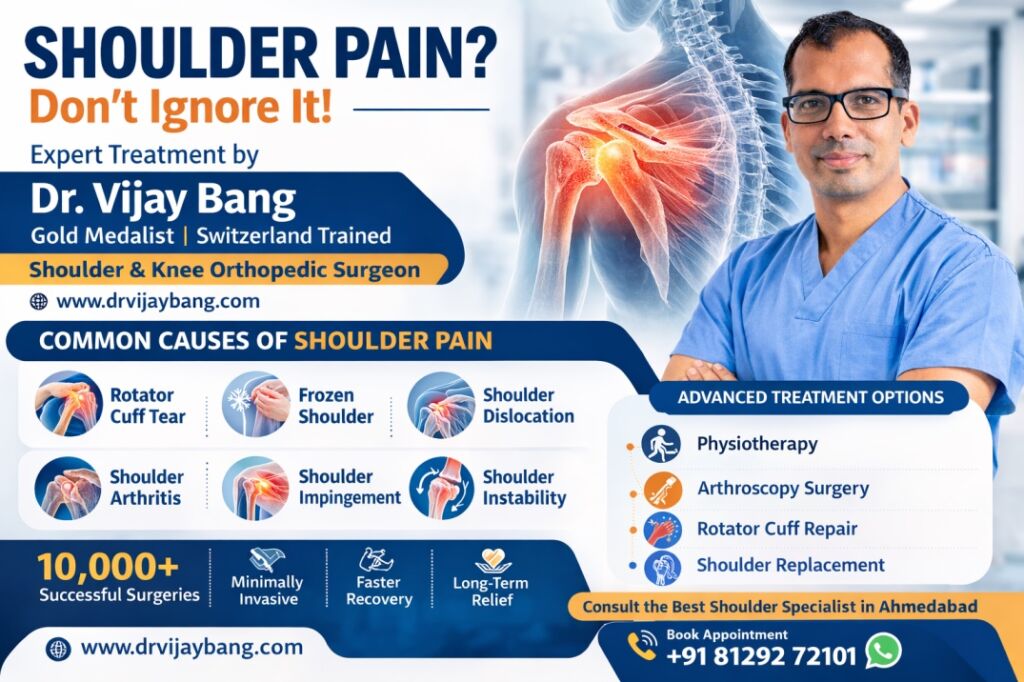
Common Causes of Shoulder Pain Treated by a Shoulder Specialist in Ahmedabad
Shoulder pain rarely has a single cause. In clinical practice, patients often present with similar symptoms such as pain, stiffness, or difficulty lifting the arm, but the underlying conditions can be very different.
This is why accurate diagnosis by an experienced shoulder specialist in Ahmedabad is essential before starting treatment.
Many patients initially try home remedies or random exercises they find online. While some minor shoulder problems improve with rest and physiotherapy, other conditions can worsen if left untreated.
A careful evaluation by a shoulder surgeon in Ahmedabad helps identify the exact cause of pain and ensures that treatment is targeted and effective.
Below are some of the most common shoulder conditions seen in orthopedic practice.
Rotator Cuff Tear – The Most Common Cause of Shoulder Pain
One of the leading reasons patients consult a shoulder doctor in Ahmedabad is a rotator cuff injury.
The rotator cuff is a group of four muscles and tendons that stabilize the shoulder joint and allow smooth arm movement. These tendons attach muscles to the bone and play a crucial role in lifting and rotating the arm.
When these tendons become inflamed, damaged, or torn, patients experience pain and weakness in the shoulder.
Rotator cuff injuries may occur due to:
• repetitive overhead activities
• sports injuries
• lifting heavy objects
• aging-related degeneration
• accidents or falls
In many cases, rotator cuff tears develop gradually over time.
Symptoms of Rotator Cuff Tear
Patients with rotator cuff injuries commonly report:
• pain while lifting the arm
• difficulty reaching overhead
• weakness in the shoulder
• pain during sleep, especially when lying on the affected side
• clicking or catching sensation in the shoulder
These symptoms often worsen with activity.
If left untreated, rotator cuff tears can enlarge and lead to severe shoulder dysfunction.
Consulting a rotator cuff specialist in Ahmedabad early can prevent progression of the injury.
Diagnosis of Rotator Cuff Tears
An experienced shoulder surgeon in Ahmedabad typically diagnoses rotator cuff injuries through:
Clinical Examination
Testing shoulder strength, range of motion, and pain during specific movements.
Imaging Studies
Imaging tests may include:
• X-rays
• MRI scans
• ultrasound imaging
MRI is particularly useful for confirming tendon tears and determining their severity.
Treatment of Rotator Cuff Injuries
Treatment depends on the severity of the tear.
Non-Surgical Treatment
Many partial tears improve with conservative treatment.
Options include:
• physiotherapy exercises
• anti-inflammatory medications
• activity modification
• corticosteroid injections
These treatments aim to reduce pain and strengthen surrounding muscles.
Surgical Treatment
Large or complete rotator cuff tears may require surgery.
Modern shoulder arthroscopy surgery in Ahmedabad allows surgeons to repair torn tendons through small incisions using specialized instruments.
Benefits of arthroscopic rotator cuff repair include:
• minimal surgical trauma
• faster recovery
• smaller scars
• improved functional outcomes
Patients undergoing surgery with an experienced shoulder arthroscopy surgeon in Ahmedabad often experience excellent recovery.
Frozen Shoulder – A Common but Misunderstood Condition
Frozen shoulder, medically known as adhesive capsulitis, is another frequent cause of shoulder pain.
This condition causes progressive stiffness and restricted movement of the shoulder joint.
Unlike rotator cuff injuries, frozen shoulder primarily affects the capsule surrounding the joint.
Many patients visiting a shoulder specialist in Ahmedabad with frozen shoulder report difficulty performing simple activities such as:
• combing hair
• reaching overhead
• fastening clothes behind the back
• lifting objects
Frozen shoulder typically develops gradually.
Who Is Most Likely to Develop Frozen Shoulder
Certain individuals have a higher risk of developing frozen shoulder.
Risk factors include:
• diabetes
• thyroid disorders
• prolonged immobilization of the arm
• previous shoulder injury
• age between 40 and 60
Frozen shoulder is particularly common among diabetic patients.
Consulting a frozen shoulder specialist in Ahmedabad early can shorten recovery time.
Stages of Frozen Shoulder
Frozen shoulder usually progresses through three stages.
Freezing Stage
Pain gradually increases and shoulder movement becomes restricted.
Frozen Stage
Pain may reduce slightly, but stiffness becomes severe.
Thawing Stage
Gradual improvement in shoulder movement occurs.
Without treatment, frozen shoulder can last for 1–2 years.
Treatment of Frozen Shoulder
Treatment focuses on restoring mobility and reducing pain.
Common approaches include:
• physiotherapy
• stretching exercises
• anti-inflammatory medications
• steroid injections
In severe cases where movement remains restricted, arthroscopic release surgery performed by a shoulder surgeon in Ahmedabad may be recommended.
Shoulder Dislocation – A Painful and Recurring Problem
Shoulder dislocation occurs when the upper arm bone slips out of the shoulder socket.
Because the shoulder joint is highly mobile, it is particularly susceptible to dislocations.
This injury frequently occurs during:
• sports accidents
• falls
• road traffic accidents
• sudden twisting movements
Many young athletes consult a shoulder specialist in Ahmedabad after experiencing shoulder dislocations.
Symptoms of Shoulder Dislocation
Common symptoms include:
• severe shoulder pain
• visible deformity of the joint
• inability to move the arm
• swelling and bruising
In many cases, the shoulder must be manually repositioned by a doctor.
Recurrent Shoulder Dislocation
One of the biggest problems following a shoulder dislocation is recurrence.
Once the stabilizing structures of the shoulder are damaged, the joint becomes prone to repeated dislocations.
Young athletes and active individuals are particularly at risk.
Patients with repeated dislocations often require shoulder instability surgery in Ahmedabad.
Arthroscopic Shoulder Stabilization
Modern treatment for recurrent dislocation often involves arthroscopic stabilization surgery.
During this procedure, the surgeon repairs damaged ligaments and cartilage using minimally invasive techniques.
Advantages include:
• small incisions
• faster recovery
• improved shoulder stability
Patients treated by an experienced shoulder arthroscopy surgeon in Ahmedabad can usually return to sports after rehabilitation.
Shoulder Impingement Syndrome
Shoulder impingement occurs when rotator cuff tendons become compressed between bones during arm movement.
This condition often develops in people performing repetitive overhead activities.
Common causes include:
• sports such as tennis or swimming
• repetitive lifting
• poor shoulder mechanics
Symptoms include pain when lifting the arm or reaching overhead.
Early treatment by a shoulder doctor in Ahmedabad can prevent progression to rotator cuff tears.
Shoulder Arthritis
As people age, cartilage in the shoulder joint may gradually wear down.
This condition leads to shoulder arthritis.
Symptoms include:
• chronic shoulder pain
• stiffness
• grinding sensation during movement
• reduced range of motion
In advanced cases, shoulder replacement surgery performed by a shoulder replacement surgeon in Ahmedabad may be necessary.
Importance of Accurate Diagnosis
Because multiple conditions can cause similar symptoms, accurate diagnosis is essential.
A qualified shoulder specialist in Ahmedabad will evaluate:
• medical history
• physical examination findings
• imaging studies
This ensures that treatment is tailored to the specific condition.
Advanced Shoulder Treatments by a Shoulder Specialist in Ahmedabad
Modern orthopedic medicine has significantly improved the way shoulder injuries are treated. In the past, many shoulder conditions required large open surgeries with long recovery periods. Today, advances in technology and surgical techniques allow many procedures to be performed through minimally invasive methods.
Patients searching for the best shoulder specialist in Ahmedabad often want treatments that provide faster recovery, minimal pain, and long-term improvement in shoulder function.
Specialized care from an experienced shoulder surgeon in Ahmedabad can help achieve these goals by using modern techniques such as shoulder arthroscopy and advanced joint replacement procedures.
Shoulder Arthroscopy – Modern Minimally Invasive Shoulder Surgery
One of the biggest breakthroughs in orthopedic surgery has been the development of arthroscopic techniques.
Shoulder arthroscopy is a minimally invasive procedure in which surgeons use a small camera and specialized instruments to treat shoulder problems through tiny incisions.
Instead of large surgical cuts, arthroscopy allows surgeons to visualize and repair structures inside the shoulder joint with precision.
Patients consulting a shoulder arthroscopy surgeon in Ahmedabad often benefit from this modern approach.
Conditions Treated with Shoulder Arthroscopy
Arthroscopy can be used to treat several shoulder conditions, including:
• rotator cuff tears
• shoulder instability
• labral tears
• frozen shoulder
• shoulder impingement syndrome
• loose bodies inside the joint
These conditions commonly cause shoulder pain and functional limitations.
An experienced shoulder specialist in Ahmedabad can determine whether arthroscopic surgery is appropriate.
Advantages of Arthroscopic Shoulder Surgery
Compared with traditional open surgery, arthroscopy offers several advantages:
• smaller surgical scars
• less damage to surrounding tissues
• reduced postoperative pain
• shorter hospital stay
• faster recovery
Because of these benefits, arthroscopy has become the preferred technique for many shoulder procedures.
Patients treated by an experienced shoulder surgeon in Ahmedabad often return to daily activities much sooner.
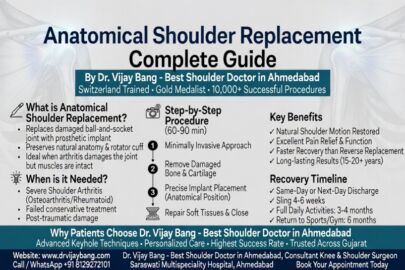
Shoulder Replacement Surgery
While many shoulder problems can be treated with arthroscopy or conservative therapy, severe arthritis or complex fractures may require shoulder replacement surgery.
In shoulder replacement surgery, damaged joint surfaces are replaced with artificial implants that restore smooth movement and reduce pain.
Patients suffering from advanced arthritis frequently consult a shoulder replacement surgeon in Ahmedabad for evaluation.
Types of Shoulder Replacement
Modern orthopedic surgery offers several types of shoulder replacement procedures.
Total Shoulder Replacement
Both the ball and socket of the joint are replaced with artificial components.
Reverse Shoulder Replacement
This procedure reverses the natural anatomy of the shoulder joint and is often used for patients with large rotator cuff tears.
Partial Shoulder Replacement
Only the damaged portion of the joint is replaced.
The choice of procedure depends on the specific condition and overall health of the patient.
A qualified shoulder specialist in Ahmedabad will evaluate imaging studies and recommend the most appropriate treatment.
Recovery After Shoulder Surgery
One of the most common questions patients ask is how long it takes to recover after shoulder surgery.
Recovery timelines vary depending on the type of surgery performed.
However, most patients follow a structured rehabilitation program.
First Two Weeks
During the initial phase, pain and swelling gradually decrease.
Patients usually wear a sling to protect the shoulder while tissues begin to heal.
Four to Six Weeks
Gentle physiotherapy exercises begin to restore shoulder movement.
At this stage, mobility improves gradually.
Three Months
Strengthening exercises are introduced.
Patients typically regain significant shoulder function.
Six Months
Most patients return to normal daily activities.
Athletes may gradually resume sports activities under supervision.
Following the rehabilitation plan recommended by a shoulder doctor in Ahmedabad is crucial for optimal recovery.
Preventing Shoulder Injuries
Prevention plays an important role in maintaining shoulder health.
Many shoulder injuries can be avoided by adopting healthy habits and proper exercise techniques.
Key prevention strategies include:
• maintaining good posture
• warming up before sports activities
• strengthening shoulder muscles
• avoiding sudden heavy lifting
• practicing proper weightlifting techniques
Regular shoulder strengthening exercises help improve stability and reduce the risk of injury.
Consulting a shoulder specialist in Ahmedabad for early symptoms can prevent small problems from becoming major injuries.
Why Early Consultation Is Important
Many patients delay medical evaluation because they assume shoulder pain will resolve on its own.
However, persistent shoulder pain may indicate underlying conditions such as rotator cuff tears or joint degeneration.
Early consultation with an experienced shoulder surgeon in Ahmedabad allows timely diagnosis and treatment.
Prompt treatment often leads to faster recovery and prevents long-term complications.
Frequently Asked Questions About Shoulder Pain
This section addresses common questions patients ask when searching online for a shoulder specialist in Ahmedabad.
What is the most common cause of shoulder pain?
Rotator cuff injuries are among the most common causes of shoulder pain. These injuries occur when tendons that stabilize the shoulder become inflamed or torn.
When should I see a shoulder specialist?
You should consult a shoulder doctor in Ahmedabad if shoulder pain persists for more than two weeks or interferes with daily activities.
Can shoulder pain heal without surgery?
Yes, many shoulder conditions improve with physiotherapy, medications, and activity modification.
However, severe injuries may require surgery.
Is shoulder arthroscopy safe?
Shoulder arthroscopy is considered safe when performed by an experienced shoulder arthroscopy surgeon in Ahmedabad.
It is a minimally invasive technique with excellent success rates.
How long does rotator cuff surgery recovery take?
Most patients recover within three to six months, depending on the severity of the tear and adherence to physiotherapy.
Can shoulder dislocation happen again?
Yes. Once a shoulder dislocates, the risk of recurrence increases, especially in young athletes.
Surgical stabilization may be required.
What are symptoms of frozen shoulder?
Frozen shoulder typically causes pain, stiffness, and limited shoulder movement.
Can exercise help shoulder pain?
Targeted physiotherapy exercises often help improve strength and flexibility.
However, exercises should be performed under medical guidance.
Final Thoughts – Shoulder Pain Treatment in Ahmedabad
Shoulder pain can significantly affect quality of life if left untreated. Fortunately, modern orthopedic medicine offers effective solutions ranging from physiotherapy to advanced surgical procedures.
Early diagnosis and specialized treatment are essential for achieving the best outcomes.
Patients experiencing persistent shoulder pain should consult an experienced shoulder specialist in Ahmedabad for accurate diagnosis and personalized care.
Advanced techniques such as arthroscopy and modern shoulder replacement surgery allow patients to regain mobility and return to active lifestyles.
With proper treatment and rehabilitation, most individuals can successfully recover from shoulder injuries and enjoy pain-free movement once again.