A Practical, Patient-Centered Guide
Introduction
If you’ve been advised arthroscopic rotator cuff repair, it usually means your shoulder pain has progressed beyond simple treatment and needs surgical correction for long-term function.
Most patients focus only on the surgery itself. But in reality, what you do before surgery plays a major role in your recovery, pain levels, and final outcome.
This guide is written to be practical, detailed, and truly helpful, so you know exactly:
- What to do weeks before surgery
- What tests and precautions are needed
- How to prepare your body and mind
- How to set up your home for smooth recovery
Understanding Your Condition First
A Rotator Cuff Tear involves damage to the muscles and tendons that stabilize your shoulder.
Common symptoms:
- Pain while lifting the arm
- Weakness
- Night pain (very important sign)
- Difficulty in daily activities
When conservative treatment fails, arthroscopic repair is recommended.
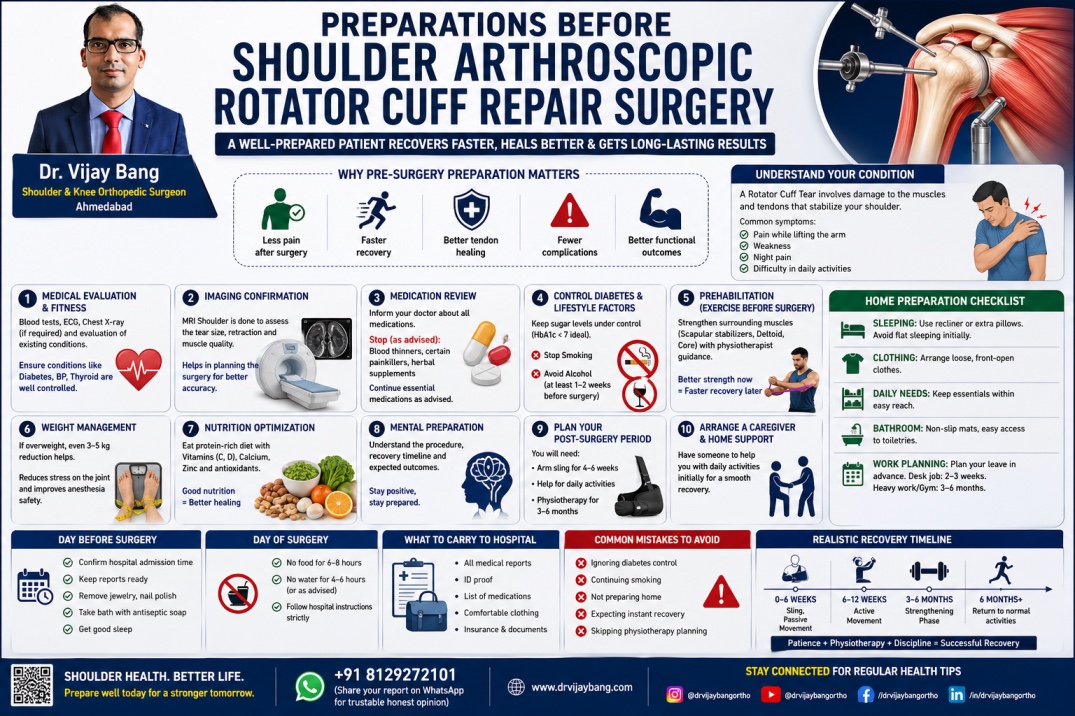
Why Pre-Surgery Preparation Matters
Patients who prepare properly:
- Have less pain after surgery
- Recover faster
- Have better tendon healing
- Face fewer complications
Think of it this way:
👉 Surgery repairs the tendon
👉 Preparation ensures the body is ready to heal
1. Medical Evaluation & Fitness for Surgery
Before surgery, your doctor will ensure you are fit for anesthesia and the procedure.
Basic Tests Include:
- Blood tests (CBC, sugar, kidney function)
- ECG (heart evaluation)
- Chest X-ray (if required)
If you have conditions like:
- Diabetes
- Hypertension
- Thyroid disorders
They must be well controlled before surgery.
👉 Poorly controlled sugar = delayed healing + higher infection risk
2. Imaging Confirmation
Accurate diagnosis is critical.
Most patients undergo MRI Shoulder Scan to assess:
- Size of tear
- Retraction of tendon
- Muscle quality
This helps plan:
- Type of repair
- Number of anchors
- Surgical difficulty
3. Medication Review (Very Important)
You must inform your doctor about all medications.
Medications to Stop (Only after doctor advice):
- Blood thinners (e.g., aspirin, clopidogrel)
- Certain painkillers
- Herbal supplements (can affect bleeding)
Continue:
- Essential medicines like BP or thyroid meds (as advised)
👉 Never stop medicines on your own.
4. Control of Diabetes & Lifestyle Factors
If you are diabetic:
- Maintain fasting sugar < 130 mg/dL
- HbA1c ideally < 7
Stop:
- Smoking 🚫
- Alcohol (at least 1–2 weeks before surgery)
Why?
- Smoking reduces blood supply → poor tendon healing
- Alcohol interferes with anesthesia and recovery
5. Prehabilitation (Exercise Before Surgery)
This is one of the most underrated but powerful steps.
Even though the tendon is torn, strengthening surrounding muscles helps.
Focus Areas:
- Scapular stabilizers
- Deltoid muscle
- Core strength
Benefits:
- Better post-op control
- Faster rehab
- Reduced stiffness
👉 A physiotherapist-guided program is ideal.
6. Weight Management
If overweight:
- Even 3–5 kg weight reduction helps
- Reduces stress on joint
- Improves anesthesia safety
7. Nutrition Optimization
Healing requires proper nutrition.
Important Nutrients:
- Protein (essential for tendon healing)
- Vitamin C (collagen formation)
- Vitamin D & Calcium
- Zinc
Simple Diet Plan:
- Eggs / paneer / dal
- Fruits (especially citrus)
- Nuts & seeds
- Green vegetables
👉 Avoid crash dieting before surgery.
8. Understand the Surgery Clearly
Ask your surgeon:
- What exactly will be done
- Number of anchors
- Expected recovery timeline
- Possible risks
Understanding reduces:
- Anxiety
- Unrealistic expectations
9. Mental Preparation
Many patients are anxious before surgery.
This is normal.
Tips:
- Understand that arthroscopy is minimally invasive
- Success rates are high
- Pain is manageable with modern techniques
👉 Positive mindset improves recovery outcomes.
10. Plan Your Post-Surgery Period (Critical Step)
Recovery after rotator cuff repair is structured and long-term.
You Will Need:
- Arm sling for 4–6 weeks
- Help for daily activities
- Physiotherapy for 3–6 months
11. Home Preparation Checklist
Before surgery, set up your home.
Sleeping:
- Use recliner or extra pillows
- Avoid flat sleeping initially
Daily Needs:
- Keep essentials within reach
- Arrange loose, front-open clothing
Bathroom:
- Non-slip mats
- Easy access toiletries
12. Work & Leave Planning
Office Work:
- Usually resume in 2–3 weeks (desk job)
Heavy Work / Gym:
- Avoid for 3–6 months
Plan leave in advance to avoid stress.
13. Arrange a Caregiver
You will need help for:
- Dressing
- Bathing
- Eating initially
Having support reduces complications and improves comfort.
14. Fasting Instructions Before Surgery
Typically:
- No food for 6–8 hours
- No water for 4–6 hours
Follow hospital instructions strictly.
15. Day Before Surgery Checklist
✔ Confirm hospital admission time
✔ Keep reports ready
✔ Remove jewelry, nail polish
✔ Take bath with antiseptic soap
✔ Sleep well
16. What to Carry to Hospital
- All medical reports
- ID proof
- Comfortable clothing
- Medications list
17. Common Mistakes Patients Make
❌ Ignoring diabetes control
❌ Continuing smoking
❌ Not preparing home
❌ Expecting instant recovery
❌ Skipping physiotherapy planning
18. Realistic Expectations After Surgery
Recovery timeline:
- 0–6 weeks: Sling, passive movement
- 6–12 weeks: Active movement
- 3–6 months: Strengthening
- 6 months+: Full recovery
👉 Patience is key.
Final Takeaway
Rotator cuff surgery is not just about the operation—it is a complete journey.
The better you prepare:
- The smoother your surgery
- The faster your recovery
- The stronger your shoulder
About the Author
Dr Vijay Bang
Shoulder and Knee Orthopedic Surgeon in Ahmedabad
www.drvijaybang.com
Call/whatsapp – +91 8129272101
(share your report on WhatsApp for trustable honest opinion)
Stay Connected with Dr. Vijay Bang for Regular Health Tips:
Instagram: https://www.instagram.com/drvijaybangortho
YouTube: https://www.youtube.com/@drvijaybangortho
Facebook: https://www.facebook.com/drvijaybangortho
Linkedin: https://www.linkedin.com/in/drvijaybangortho/
Keywords
Rotator cuff surgery preparation
Shoulder arthroscopy preparation
Preoperative care shoulder surgery
Rotator cuff tear surgery guide
Orthopedic surgery preparation tips
Shoulder rehab planning
Arthroscopic surgery recovery tips
Doctor Vijay Bang shoulder surgery
Ahmedabad orthopedic surgeon