

Complete FAQ Guide Explained in Detail
Dr Vijay Bang, among best knee replacement surgeon in Ahmedabad explains…
This article is written specifically for patients who are planning a Total Knee Replacement (TKR), those who have already undergone knee replacement surgery, and family members who want to understand the realistic recovery timeline. It is also helpful for people suffering from severe knee arthritis who are searching online for answers to common questions like “How long does it take to recover from knee replacement?” or “When can I walk normally after knee replacement surgery?” The goal of this article is to provide honest, practical, and medically accurate information so patients can prepare mentally and physically for recovery.
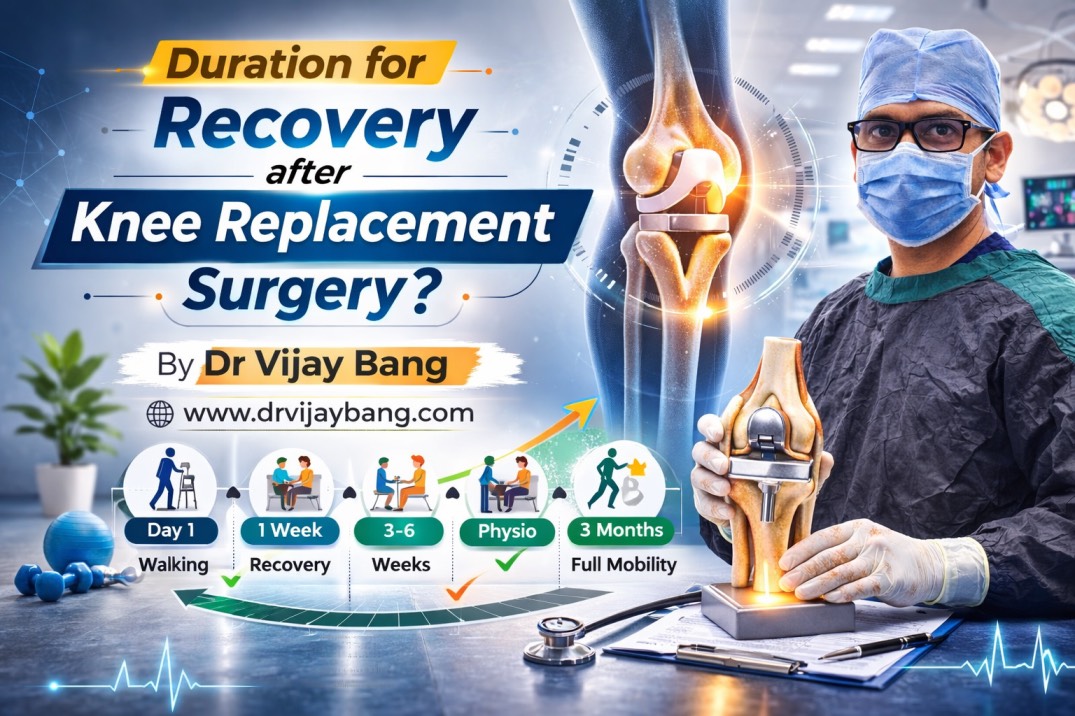
How long does it take to recover from total knee replacement?
Recovery after total knee replacement is a gradual process that typically takes between three months to one year for full recovery. Most patients notice major improvement within the first six to twelve weeks. However, complete healing of tissues, strengthening of muscles, and full functional recovery may continue for up to twelve months. The first six weeks are focused mainly on pain control, reducing swelling, and improving knee movement. By three months, most patients resume daily activities comfortably. By six months, strength and endurance improve significantly. Full recovery, including maximum flexibility and confidence in walking, can take up to one year.
How long are you in the hospital after knee replacement?
Hospital stay after total knee replacement usually ranges between two to four days. In some modern centers, selected patients may even go home the next day depending on their medical fitness, pain control, and mobility progress. The duration of hospitalization depends on factors such as age, existing medical conditions like diabetes or heart disease, and how quickly the patient starts walking after surgery. Early mobilization plays a crucial role in shortening hospital stay and improving recovery outcomes.
When can I walk after total knee replacement?
Most patients begin walking within 24 hours after surgery with the help of a walker or physiotherapist. Early walking is encouraged because it improves blood circulation, reduces the risk of complications like blood clots, and promotes faster recovery. During the first week, walking is limited to short distances inside the hospital room or home. By three to four weeks, many patients transition from a walker to a stick or cane. By six weeks, most patients can walk independently indoors without support, although outdoor walking confidence may take slightly longer.
How painful is recovery after knee replacement?
Pain after knee replacement surgery is expected but manageable with modern pain control techniques. The first one to two weeks are usually the most uncomfortable. However, pain gradually decreases as healing progresses. Many patients report that the arthritis pain they experienced before surgery was worse than the temporary post-surgical discomfort. By six weeks, pain is significantly reduced, and by three months, most patients experience minimal surgical pain. Proper medication, ice therapy, physiotherapy, and adherence to post-operative instructions help in minimizing discomfort.
How long does swelling last after total knee replacement?
Swelling is a normal part of the healing process and may last for several months. Mild swelling can persist for three to six months, and occasional swelling may be noticed even up to one year, especially after prolonged standing or walking. Swelling gradually reduces with leg elevation, ice application, physiotherapy exercises, and compression stockings. It is important to understand that mild warmth and swelling are part of normal recovery unless accompanied by redness, fever, or increasing pain.
When can I bend my knee normally after knee replacement?
Knee bending improves gradually with physiotherapy. Most patients achieve 90 degrees of bending within two to three weeks after surgery. By six to eight weeks, bending usually improves to 110–120 degrees, which is sufficient for most daily activities like sitting and climbing stairs. Maximum achievable bending typically occurs within three to six months. Consistent physiotherapy is the key factor that determines how well knee flexibility improves after total knee replacement.
When can I climb stairs after knee replacement?
Stair climbing usually begins with support within two to four weeks after surgery. Initially, patients are taught a specific technique where they go upstairs leading with the non-operated leg and come downstairs leading with the operated leg. By six to eight weeks, most patients can climb stairs independently. However, comfort level depends on muscle strength, balance, and overall recovery progress.
How long before I can drive after knee replacement?
Driving ability depends on which knee was operated and how quickly muscle strength and reflexes return. If the right knee was replaced, driving is usually possible after four to six weeks because the right leg controls the accelerator and brake. If the left knee was replaced and the patient drives an automatic car, driving may resume in two to four weeks. It is essential that the patient has good pain control and quick reaction time before returning to driving.
When can I return to work after knee replacement?
Return to work depends largely on the nature of the job. Patients with desk jobs can often resume work within four to six weeks. Jobs that require prolonged standing or light physical activity may require six to eight weeks of recovery. Physically demanding jobs that involve lifting heavy objects or continuous walking may require at least three months or more before returning safely.
How long does stiffness last after knee replacement?
Mild stiffness is common during the first two to three months after surgery. This stiffness gradually reduces as swelling decreases and muscles strengthen. Regular physiotherapy exercises are essential to prevent long-term stiffness. In rare cases where stiffness becomes severe, additional medical intervention may be required. However, with proper rehabilitation, most patients regain satisfactory movement.
How long does a knee replacement last?
Modern knee replacement implants are designed to last 15 to 20 years, and in many cases even longer. Implant longevity depends on body weight, activity level, overall health, and surgical technique. Patients who maintain a healthy lifestyle and avoid high-impact activities can expect long-term success from their knee replacement surgery.
What activities should be avoided after knee replacement?
After total knee replacement, high-impact activities such as running, jumping, and contact sports should generally be avoided because they increase stress on the artificial joint. Deep squatting and sitting cross-legged may also be restricted depending on individual cases. Low-impact activities like walking, swimming, cycling, and light yoga are usually encouraged because they help maintain joint mobility and muscle strength without damaging the implant.
When can I travel after knee replacement?
Short-distance travel is usually possible within four to six weeks after surgery. Long flights may be permitted after six to eight weeks with proper precautions such as wearing compression stockings, staying hydrated, and moving the legs frequently during the journey. Travel decisions should be made after consulting the surgeon to minimize risks like blood clots.
What is the hardest part of knee replacement recovery?
The first four to six weeks are often considered the most challenging phase of recovery. During this period, patients may experience pain, swelling, sleep disturbances, and difficulty performing exercises. However, once this early phase passes, recovery becomes smoother and more rewarding. Staying consistent with physiotherapy and maintaining a positive mindset significantly improves outcomes.
Final Summary
Recovery after total knee replacement is progressive and individualized. Most patients regain independence within six to twelve weeks, but full strength and maximum recovery may take up to one year. Patience, disciplined physiotherapy, good nutrition, and proper medical follow-up are essential for achieving the best results.
Knee replacement surgery is not just about replacing the joint — it is about restoring quality of life, mobility, and freedom from chronic arthritis pain. Understanding the realistic recovery timeline helps patients stay mentally prepared and confident throughout the healing journey.
Dr Vijay Bang
Shoulder and Knee Orthopedic Surgeon in Ahmedabad
www.drvijaybang.com
Call/WhatsApp – +91 8129272101
(Share your report on WhatsApp for a trusted honest opinion)
Stay Connected with Dr. Vijay Bang for Regular Health Tips:
Instagram: https://www.instagram.com/drvijaybangortho
YouTube: https://www.youtube.com/@drvijaybangortho
Facebook: https://www.facebook.com/drvijaybangortho
LinkedIn: https://www.linkedin.com/in/drvijaybangortho/