Dr Vijay Bang, among finest shoulder specialist in Ahmedabad for shoulder replacement , explains…
Shoulder pain can severely affect daily life. Simple activities such as combing hair, lifting objects, sleeping on one side, or reaching overhead may become extremely painful when the shoulder joint is severely damaged. For patients suffering from advanced arthritis or joint destruction, Anatomical Shoulder Replacement (Anatomic Total Shoulder Arthroplasty) is one of the most effective surgical solutions.
This article explains everything you need to know about anatomical shoulder replacement — including indications, procedure, recovery, success rates, complications, and frequently asked questions. If you are searching for a shoulder specialist in Ahmedabad, this guide will help you understand whether this surgery may be the right option for you.
Understanding the Shoulder Joint
The shoulder joint is one of the most complex joints in the human body. It is a ball-and-socket joint formed by:
- The humeral head (ball of the upper arm bone)
- The glenoid (socket of the shoulder blade)
The joint is stabilized by:
- Rotator cuff muscles
- Ligaments
- Capsule
- Labrum
This structure allows a wide range of motion, including lifting, rotation, and overhead movement.
However, because the shoulder moves so much, it is vulnerable to damage from:
- Arthritis
- Trauma
- Rotator cuff injuries
- Fractures
- Degeneration with age
When the cartilage that cushions the bones wears away, the bones start rubbing against each other — leading to severe pain and stiffness.
What Is Anatomical Shoulder Replacement?
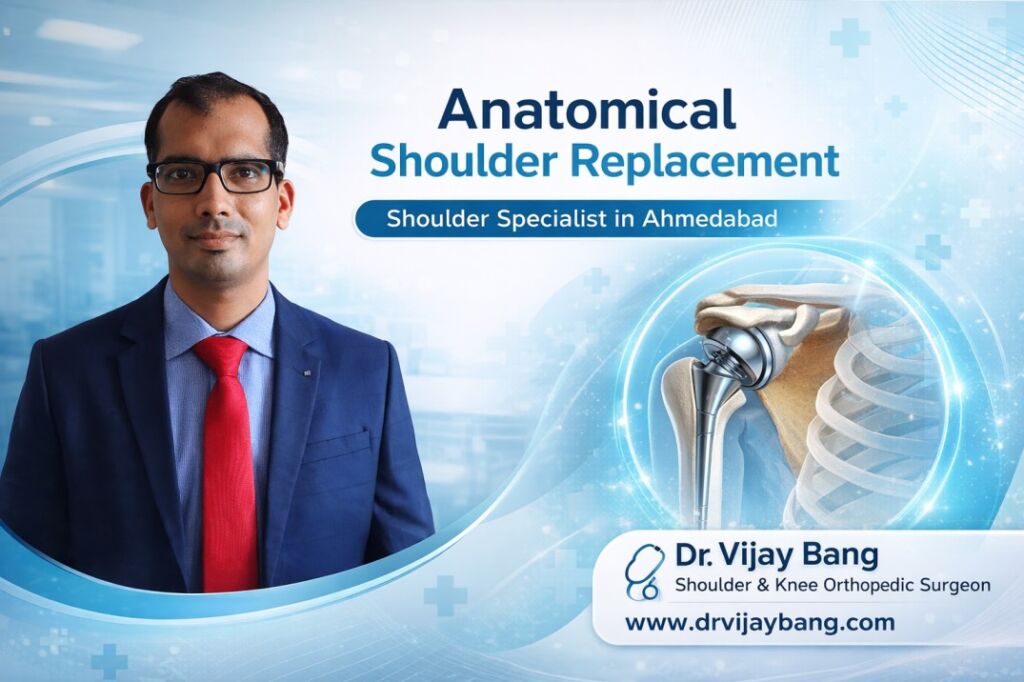
Anatomical Shoulder Replacement, also called Anatomic Total Shoulder Arthroplasty (aTSA), is a surgical procedure where the damaged parts of the shoulder joint are replaced with artificial implants designed to mimic the natural anatomy of the shoulder.
The surgery replaces two components:
- Humeral head – replaced with a metal ball
- Glenoid socket – replaced with a plastic component
Unlike reverse shoulder replacement, anatomical shoulder replacement preserves the natural mechanics of the shoulder joint.
The prosthetic components replicate the natural shoulder structure, allowing smoother movement and pain relief.
When Is Anatomical Shoulder Replacement Needed?
This surgery is usually recommended when shoulder damage becomes severe and non-surgical treatments fail.
Common conditions requiring anatomical shoulder replacement include:
1. Osteoarthritis
The most common reason. The cartilage gradually wears away due to aging and joint degeneration.
2. Rheumatoid Arthritis
An autoimmune disease that damages joint lining and cartilage.
3. Post-Traumatic Arthritis
Arthritis that develops after fractures or injuries.
4. Osteonecrosis
Loss of blood supply to the humeral head leading to bone collapse.
5. Complex Shoulder Fractures
Some fractures cannot be repaired and require replacement.
When conservative treatments such as physiotherapy, medications, or injections fail to relieve symptoms, surgery may become necessary.
Symptoms That Indicate You May Need Shoulder Replacement
Patients usually experience:
- Severe shoulder pain
- Pain at night affecting sleep
- Stiffness and reduced movement
- Grinding or clicking sensation
- Weakness while lifting arm
- Difficulty performing daily activities
If these symptoms continue for months despite treatment, shoulder replacement may be considered.
Types of Shoulder Replacement
Understanding the different types helps patients make informed decisions.
1. Anatomical Total Shoulder Replacement
- Recreates normal shoulder anatomy
- Requires intact rotator cuff muscles
- Best for arthritis patients
2. Reverse Shoulder Replacement
- Ball and socket positions are reversed
- Used when rotator cuff is severely damaged
3. Partial Shoulder Replacement
- Only the humeral head is replaced
- Used in selected fractures
An experienced shoulder specialist in Ahmedabad will determine which procedure is best for the patient.
How Anatomical Shoulder Replacement Surgery Is Performed
The surgery typically takes around 2–3 hours and involves the following steps.
Step 1: Anaesthesia
The patient receives general anaesthesia or a combination of nerve block and sedation.
Step 2: Surgical Incision
A small incision is made in the front of the shoulder.
Step 3: Removal of Damaged Bone
The surgeon removes the damaged humeral head and prepares the socket.
Step 4: Implant Placement
Two components are inserted:
- Metal humeral head implant
- Polyethylene glenoid socket
Step 5: Closure
The incision is closed and a sling is applied.
Patients usually stay in the hospital for 1–3 days after surgery.
Benefits of Anatomical Shoulder Replacement
The surgery can significantly improve quality of life.
Major Benefits
- Relief from chronic pain
- Improved shoulder mobility
- Better sleep
- Ability to perform daily activities
- Improved strength and function
Studies show that 90–95% of patients experience significant pain relief and improved function after shoulder replacement surgery.
Implants often last 15–20 years or longer depending on patient activity levels.
Success Rate of Anatomical Shoulder Replacement
Shoulder replacement is considered one of the most successful orthopedic procedures.
Research shows:
- 90–95% success rate
- Implant survival around 90% at 10 years
- Long-term improvement in pain and function
Most patients return to daily activities without severe pain after recovery.
Recovery Timeline After Shoulder Replacement
Recovery occurs gradually over several months.
First 6 Weeks
- Sling support
- Passive physiotherapy
- Gentle movement exercises
6–12 Weeks
- Active shoulder exercises
- Strengthening begins
3–6 Months
- Return to normal daily activities
Full recovery may take 6–9 months, depending on rehabilitation and patient health.
Physiotherapy plays a crucial role in achieving optimal outcomes.
Risks and Complications
Like any surgery, shoulder replacement has potential risks.
Possible complications include:
- Infection
- Implant loosening
- Nerve injury
- Shoulder dislocation
- Rotator cuff failure
- Blood clots
However, the overall complication rate remains relatively low at around 10–13%.
Choosing an experienced shoulder surgeon significantly reduces these risks.
Who Is the Ideal Candidate for Anatomical Shoulder Replacement?
The best candidates usually have:
- Severe shoulder arthritis
- Intact rotator cuff tendons
- Persistent pain despite treatment
- Limited shoulder movement
- Difficulty performing daily activities
Age is not the only factor. Many patients in their 50s to 70s benefit from the surgery.
When Should You Avoid Shoulder Replacement?
The surgery may not be ideal if:
- Rotator cuff is severely torn
- Infection exists in the shoulder
- Bone quality is extremely poor
- Patient is medically unfit for surgery
In such cases, other procedures such as reverse shoulder replacement may be recommended.
Frequently Asked Questions (FAQ)
Below are commonly searched questions from patients considering shoulder replacement.
1. What is the difference between anatomical and reverse shoulder replacement?
Anatomical shoulder replacement replicates the natural shoulder structure with a ball and socket in their normal positions. Reverse shoulder replacement switches these positions and relies on the deltoid muscle instead of the rotator cuff.
2. How painful is shoulder replacement surgery?
Most patients experience moderate pain for the first few days after surgery, which is controlled with medications and nerve blocks. Pain gradually improves over weeks.
3. How long does an anatomical shoulder replacement last?
Modern implants typically last 15–20 years or longer depending on activity level and implant quality.
4. Can I lift weights after shoulder replacement?
Light weight lifting and resistance exercises are usually allowed after rehabilitation. However, heavy lifting and contact sports should be avoided.
5. When can I drive after shoulder replacement?
Most patients can drive after 4–6 weeks, once they regain sufficient control and mobility.
6. Is shoulder replacement surgery safe?
Yes. It is considered a safe and highly effective procedure when performed by experienced surgeons.
7. Will I regain full shoulder movement?
Most patients regain excellent mobility, but extreme movements may still be limited.
8. What happens if I delay shoulder replacement?
Delaying surgery can lead to:
- Worsening pain
- Increased stiffness
- Bone erosion
- More complex surgery later
9. Can both shoulders be replaced?
Yes, but surgeries are usually performed separately with adequate recovery time between them.
10. Is physiotherapy necessary after surgery?
Absolutely. Rehabilitation is essential to restore shoulder strength, flexibility, and function.
Why Select Dr Vijay Bang for Shoulder Replacement Surgery?
When considering shoulder replacement, selecting a skilled and specialized surgeon is crucial for achieving the best outcome.
Dr Vijay Bang is a highly experienced Shoulder and Knee Orthopedic Surgeon in Ahmedabad, known for advanced arthroscopic and shoulder replacement procedures.
Key Reasons Patients Choose Dr Vijay Bang
1. Shoulder Subspecialist
Dr Vijay Bang focuses specifically on shoulder and knee surgeries, ensuring deep expertise in complex shoulder conditions.
2. Advanced Arthroscopic and Replacement Techniques
Use of modern surgical techniques helps minimize complications and improve recovery.
3. Personalized Patient Care
Each patient receives individualized evaluation, treatment planning, and rehabilitation guidance.
4. Honest Medical Advice
Patients receive transparent and ethical recommendations about whether surgery is necessary.
5. Comprehensive Rehabilitation Support
Structured physiotherapy guidance helps ensure optimal post-surgical recovery.
For patients searching online for a shoulder specialist in Ahmedabad or shoulder replacement surgeon in Ahmedabad, choosing an experienced specialist makes a significant difference in outcomes.
Final Thoughts
Anatomical shoulder replacement is a life-changing surgery for patients suffering from severe shoulder arthritis and joint damage. The procedure provides reliable pain relief, improved mobility, and restoration of daily function.
With modern implants, expert surgical techniques, and proper rehabilitation, most patients regain excellent shoulder function and significantly improved quality of life.
If you have persistent shoulder pain, stiffness, or difficulty lifting your arm, consulting a qualified shoulder specialist in Ahmedabad can help determine the best treatment option for you.
Early diagnosis and appropriate treatment often lead to the best outcomes.
Author
Dr Vijay Bang
Shoulder and Knee Orthopedic Surgeon in Ahmedabad
www.drvijaybang.com
Call/whatsapp – +91 8129272101
(share your report on WhatsApp for trustable honest opinion)
Stay Connected with Dr. Vijay Bang for Regular Health Tips:
Instagram: https://www.instagram.com/drvijaybangortho
YouTube: https://www.youtube.com/@drvijaybangortho
Facebook: https://www.facebook.com/drvijaybangortho
Linkedin: https://www.linkedin.com/in/drvijaybangortho/