

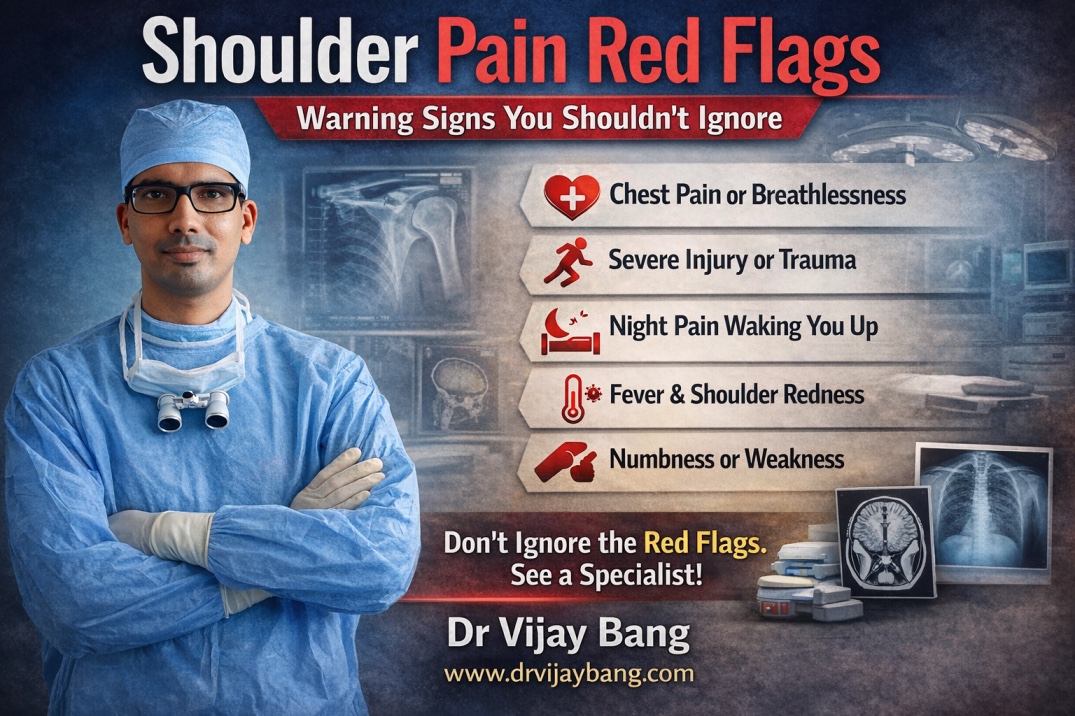
Shoulder pain is one of the most common musculoskeletal complaints seen in orthopedic clinics. Millions of people experience shoulder discomfort at some point in their lives due to overuse, injuries, sports activities, or age-related degeneration. In most cases, shoulder pain is caused by relatively benign conditions such as rotator cuff tendinitis, muscle strain, or impingement syndrome.
However, not all shoulder pain is simple or harmless. Sometimes shoulder pain can signal a serious underlying condition, including nerve compression, severe tendon tears, infections, tumors, or even life-threatening problems like heart disease.
These warning signs are known as “red flags.”
Recognizing these red flags early can help patients seek timely medical care and avoid permanent damage, disability, or complications.
This detailed guide explains:
- What shoulder pain red flags are
- Symptoms that require urgent medical attention
- Dangerous conditions that may cause shoulder pain
- When you should see a shoulder specialist
- Frequently asked questions people search on Google
This article is meant for patients with persistent shoulder pain, athletes, elderly individuals, people with previous injuries, and anyone worried that their shoulder pain may be serious.
Understanding Shoulder Pain
The shoulder is the most mobile joint in the human body, which also makes it vulnerable to injury.
It consists of:
- The ball and socket joint
- Rotator cuff muscles
- Tendons and ligaments
- Bursa (fluid sacs)
- Cartilage
- Nerves
- Bones including the clavicle, scapula, and humerus
Because so many structures work together, shoulder pain can arise from many causes.
Common non-serious causes include:
- Rotator cuff tendinitis
- Shoulder impingement
- Frozen shoulder
- Muscle strain
- Minor ligament sprain
- Overuse injury
But sometimes shoulder pain is the tip of the iceberg and may represent a more serious problem.
That is where red flags become important.
What Are Red Flags in Shoulder Pain?
Red flags are warning symptoms or signs that suggest a serious underlying condition rather than a routine musculoskeletal problem.
These signs alert doctors that further investigations like MRI, CT scan, blood tests, or emergency evaluation may be necessary.
Red flags usually indicate:
- Infection
- Tumor
- Severe nerve damage
- Fracture
- Systemic disease
- Internal organ disease
- Severe rotator cuff tear
- Shoulder instability
- Vascular problems
Ignoring these symptoms can delay diagnosis and lead to serious complications.
Major Red Flags for Shoulder Pain
Below are the most important warning signs.
1. Shoulder Pain with Chest Pain or Breathlessness
One of the most dangerous red flags is shoulder pain associated with:
- Chest tightness
- Breathlessness
- Sweating
- Nausea
- Pain radiating to arm or jaw
This may indicate a heart attack.
Many patients with heart problems feel pain in the left shoulder or left arm.
Why does this happen?
The heart and shoulder share nerve pathways, so heart pain may be referred to the shoulder.
What to do?
Seek immediate emergency care if shoulder pain occurs with chest symptoms.
2. Severe Shoulder Pain After Trauma
Any severe trauma such as:
- Road traffic accident
- Fall from height
- Sports injury
- Direct blow to shoulder
combined with:
- Severe pain
- Deformity
- Inability to move the arm
- Swelling
- Bruising
may indicate:
- Shoulder fracture
- Shoulder dislocation
- Rotator cuff tear
- Ligament rupture
These injuries require urgent orthopedic evaluation.
3. Night Pain That Wakes You From Sleep
Shoulder pain that wakes you up at night or persists even at rest may indicate serious pathology.
Possible causes include:
- Large rotator cuff tear
- Shoulder arthritis
- Tumors
- Severe inflammation
- Infection
Night pain is considered a significant red flag, especially if it progressively worsens.
4. Shoulder Pain with Fever
Pain associated with:
- Fever
- Chills
- Redness around the joint
- Warmth
- Severe tenderness
may indicate joint infection (septic arthritis).
This condition can rapidly damage the joint and requires urgent medical treatment and antibiotics.
People at higher risk include:
- Diabetics
- Immunocompromised patients
- Elderly patients
- Patients with recent surgery
- Intravenous drug users
5. Unexplained Weight Loss with Shoulder Pain
If shoulder pain occurs with:
- Unintentional weight loss
- Persistent fatigue
- Loss of appetite
- Night sweats
doctors may suspect cancer or systemic disease.
Possible causes include:
- Bone tumors
- Metastatic cancer
- Lung cancer spreading to shoulder
- Lymphoma
Although rare, this is an important red flag that requires medical evaluation.
6. Shoulder Pain with Numbness or Weakness
If shoulder pain is associated with:
- Arm weakness
- Tingling in fingers
- Numbness
- Burning sensation
the problem may originate from the neck (cervical spine) rather than the shoulder.
Possible causes include:
- Cervical disc herniation
- Nerve compression
- Brachial plexus injury
Severe nerve compression can lead to permanent nerve damage if untreated.
7. Inability to Lift the Arm
Sudden inability to raise the arm, especially after injury, may indicate:
- Rotator cuff tear
- Shoulder dislocation
- Nerve injury
- Severe muscle rupture
Patients often describe the feeling as “the arm has no power.”
This requires early orthopedic evaluation because early treatment leads to better recovery.
8. Visible Shoulder Deformity
Any abnormal shape or deformity of the shoulder may indicate:
- Dislocation
- Fracture
- Clavicle injury
- Acromioclavicular joint injury
Signs include:
- Shoulder appearing out of place
- Bone sticking out
- Arm hanging abnormally
This condition usually requires urgent treatment or reduction of the dislocation.
9. Shoulder Pain with History of Cancer
Patients with a past history of cancer should be cautious about persistent shoulder pain.
Certain cancers may spread to bones, including:
- Breast cancer
- Lung cancer
- Kidney cancer
- Thyroid cancer
- Prostate cancer
Persistent pain without clear injury should be evaluated carefully.
10. Shoulder Pain Not Improving After 6 Weeks
Most common shoulder problems improve with:
- Rest
- Physiotherapy
- Pain medication
- Activity modification
If shoulder pain persists beyond 6 weeks, it may indicate:
- Rotator cuff tear
- Frozen shoulder
- Shoulder arthritis
- Labral tear
- Chronic instability
Chronic untreated problems can eventually require surgery.
Other Concerning Symptoms in Shoulder Pain
Certain additional symptoms may indicate more serious problems:
- Progressive stiffness
- Shoulder swelling
- Skin redness
- Loss of shoulder shape
- Persistent clicking with pain
- Severe weakness
Although these are not always dangerous, they should be evaluated by a specialist.
Serious Conditions That Cause Shoulder Pain
Several serious diseases can present with shoulder pain.
Rotator Cuff Tears
Large rotator cuff tears can cause:
- Severe weakness
- Night pain
- Difficulty lifting the arm
These tears often require arthroscopic surgery for repair.
Shoulder Dislocation
This occurs when the shoulder ball pops out of the socket.
Symptoms include:
- Severe pain
- Shoulder deformity
- Arm held in awkward position
Repeated dislocations can lead to chronic instability.
Shoulder Infection
Joint infections are rare but dangerous.
If untreated they can cause:
- Rapid cartilage destruction
- Permanent stiffness
- Severe arthritis
Early diagnosis is crucial.
Tumors of the Shoulder
Both benign and malignant tumors can affect shoulder bones.
Symptoms may include:
- Persistent deep pain
- Night pain
- Swelling
- Weakness
Imaging tests such as MRI and CT scans help diagnose these conditions.
Referred Pain from Internal Organs
Shoulder pain may sometimes come from other organs.
Examples include:
Heart problems
Pain radiating to left shoulder.
Gallbladder disease
Right shoulder pain due to gallbladder inflammation.
Lung tumors
Pain near the shoulder blade.
These cases require evaluation beyond the shoulder joint.
Who Is at Higher Risk of Serious Shoulder Pain?
Certain groups should be particularly cautious about shoulder pain.
Athletes
Especially those involved in throwing sports.
Elderly individuals
Higher risk of rotator cuff tears and fractures.
Diabetics
More prone to infections and frozen shoulder.
People with previous shoulder injuries
Recurrent problems are common.
Patients with cancer history
Possible bone metastasis.
When Should You See a Shoulder Specialist?
You should consult a specialist if you experience:
- Pain lasting more than 2–3 weeks
- Severe night pain
- Inability to lift the arm
- Shoulder instability
- Repeated dislocations
- Weakness in the arm
- Pain after trauma
Early consultation often prevents major surgery and long-term disability.
How Doctors Evaluate Red Flag Shoulder Pain
Orthopedic surgeons use several methods to evaluate shoulder pain.
Detailed history
Understanding injury mechanism and symptoms.
Physical examination
Testing range of motion, strength, and stability.
Imaging tests
- X-ray
- MRI
- CT scan
- Ultrasound
Blood tests
Used when infection or systemic disease is suspected.
Proper diagnosis helps determine the best treatment plan.
Treatment Options for Serious Shoulder Problems
Treatment depends on the underlying cause.
Non-surgical treatment
Many conditions can be treated with:
- Physiotherapy
- Anti-inflammatory medications
- Activity modification
- Corticosteroid injections
Surgical treatment
Surgery may be required for:
- Rotator cuff tears
- Shoulder instability
- Fractures
- Labral injuries
- Severe arthritis
Modern shoulder surgery is usually performed using minimally invasive arthroscopic techniques, allowing faster recovery.
Frequently Asked Questions About Shoulder Pain
What shoulder pain symptoms should not be ignored?
Symptoms that should never be ignored include:
- Shoulder pain with chest pain
- Severe pain after trauma
- Fever with shoulder pain
- Arm weakness
- Night pain that wakes you up
- Unexplained weight loss
These signs require prompt medical attention.
Is shoulder pain ever related to heart problems?
Yes.
Heart attacks can cause referred pain to the left shoulder or arm, often associated with chest pressure, sweating, and breathlessness.
Emergency care is required in such situations.
Can shoulder pain be a sign of cancer?
Although uncommon, persistent shoulder pain with weight loss, night pain, and fatigue may indicate cancer involving bones or surrounding tissues.
Medical evaluation is necessary.
When should I worry about shoulder pain?
You should worry about shoulder pain if:
- It lasts more than 6 weeks
- It occurs after major injury
- It causes weakness or numbness
- It worsens at night
- It limits daily activities
Early diagnosis prevents complications.
Can rotator cuff tears heal without surgery?
Small tears may improve with physiotherapy.
However, large or complete tears often require surgical repair to restore shoulder strength and function.
Why Early Diagnosis Matters
Ignoring shoulder red flags can lead to:
- Chronic pain
- Permanent stiffness
- Muscle wasting
- Joint degeneration
- Reduced quality of life
Early treatment leads to faster recovery and better outcomes.
Why Choose an Experienced Shoulder Surgeon
Shoulder problems require specialized expertise because the joint is complex.
An experienced shoulder specialist can provide:
- Accurate diagnosis
- Advanced imaging evaluation
- Arthroscopic surgical techniques
- Personalized rehabilitation
Early expert care improves long-term results.
Dr Vijay Bang
Shoulder and Knee Orthopedic Surgeon in Ahmedabad
www.drvijaybang.com
Call/whatsapp – +91 8129272101
(share your report on WhatsApp for trustable honest opinion)
Stay Connected with Dr. Vijay Bang for Regular Health Tips:
Instagram: https://www.instagram.com/drvijaybangortho
YouTube: https://www.youtube.com/@drvijaybangortho
Facebook: https://www.facebook.com/drvijaybangortho
Linkedin: https://www.linkedin.com/in/drvijaybangortho/