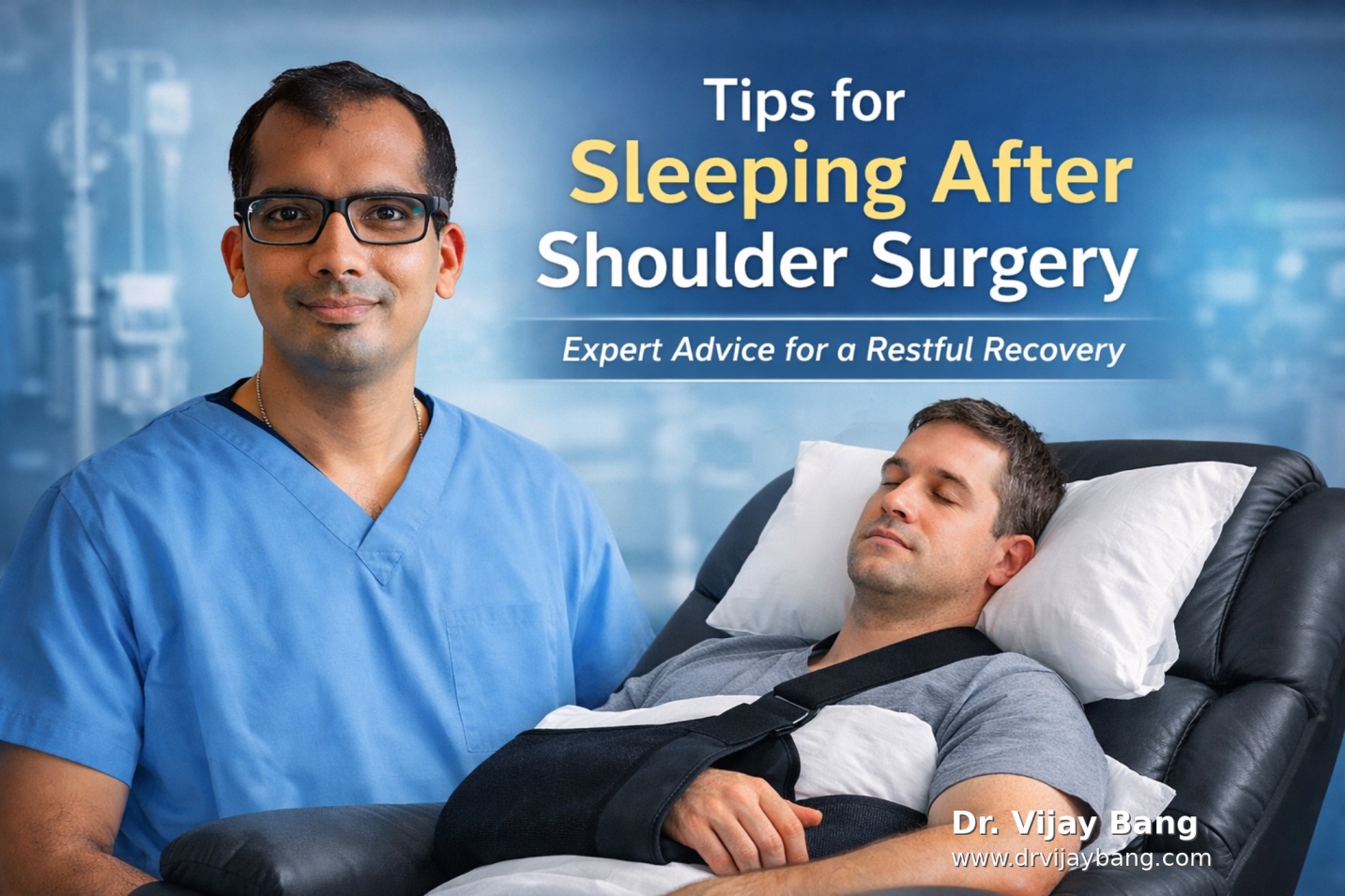
Shoulder surgery expert Dr Vijay Bang, explains….
Sleeping comfortably after shoulder surgery is one of the biggest challenges patients face during recovery. Many people say that nighttime pain and difficulty finding a comfortable sleeping position are the most frustrating parts of the healing process.
Whether you have undergone rotator cuff repair, shoulder arthroscopy, Bankart repair, or shoulder replacement, your shoulder needs proper support while sleeping. The right sleeping habits can significantly reduce pain, protect the surgical repair, and help the body heal faster.
As a shoulder specialist in Ahmedabad, I often guide my patients on practical ways to sleep safely after surgery. This article explains why sleep becomes difficult after shoulder surgery, the best sleeping positions, useful tips, and answers to common patient questions.
Why Sleeping Is Difficult After Shoulder Surgery
Many patients feel comfortable during the day but struggle to sleep at night. This happens for several reasons.
1. Post-surgical inflammation
After surgery, the body naturally creates inflammation as part of the healing process. This swelling can increase pressure around the shoulder joint and make lying down uncomfortable.
2. Shoulder position changes at night
During sleep, people naturally change positions. Sudden movements may stretch the repaired tissues, causing pain.
3. Reduced gravity support
When you lie down, the arm is no longer supported by gravity. This may increase strain on the surgical area.
4. Sling discomfort
Most patients must wear a sling for several weeks after surgery. Sleeping with the sling can feel awkward initially.
5. Muscle stiffness
After surgery, shoulder muscles can become tight, making certain positions painful.
Understanding these reasons helps patients adopt strategies that make sleeping much easier.
Best Sleeping Positions After Shoulder Surgery
The position in which you sleep is extremely important during recovery.
1. Sleeping in a Reclined Position (Best Method)
4
The most recommended position after shoulder surgery is sleeping in a reclined or semi-sitting position.
Many patients find sleeping in a recliner chair much easier than lying flat on a bed.
Benefits
- Reduces pressure on the shoulder
- Prevents accidental rolling onto the operated side
- Helps reduce swelling
- Keeps the arm stable
If you do not have a recliner chair, you can recreate this position on a bed using multiple pillows.
2. Sleeping on Your Back With Pillow Support
4
Sleeping on your back is the second safest position after shoulder surgery.
Use pillows to support the arm and prevent movement.
Recommended setup
- One pillow under the operated arm
- One pillow behind the shoulder
- A small pillow supporting the elbow
This position keeps the shoulder relaxed and prevents strain on the surgical repair.
3. Sleeping on the Non-Operated Side
4
Some patients prefer sleeping on their side.
If you sleep on the side, always lie on the non-operated shoulder.
Place a pillow in front of your body and rest the operated arm on it.
Important tips
- Never lie on the operated shoulder
- Keep the arm supported with pillows
- Maintain sling support if recommended
This position may become comfortable after the first few weeks of recovery.
15 Practical Tips to Sleep Better After Shoulder Surgery
Here are practical strategies that help many patients improve sleep during recovery.
1. Use a Recliner Chair for the First Few Weeks
Sleeping in a recliner keeps your shoulder elevated and prevents rolling during sleep. Many patients use this method for 2–4 weeks after surgery.
2. Use Multiple Pillows
Pillows help maintain proper alignment and prevent the arm from falling backward.
Useful pillow placements include:
- Under the elbow
- Behind the shoulder
- Under the forearm
3. Keep the Sling On While Sleeping
In most cases, your surgeon will recommend wearing the sling during sleep for several weeks.
The sling:
- Protects the repair
- Prevents sudden movements
- Keeps the shoulder stable
4. Avoid Sleeping on the Operated Shoulder
This is extremely important.
Sleeping on the operated shoulder can:
- Increase pain
- Damage the repair
- Delay healing
Most patients should avoid this position for at least 6–8 weeks.
5. Take Pain Medication Before Bedtime
Pain tends to increase at night because the body becomes more relaxed.
Taking prescribed pain medication before sleeping may help reduce nighttime discomfort.
Always follow your surgeon’s instructions.
6. Apply Ice Before Sleeping
Ice therapy can significantly reduce inflammation.
Apply an ice pack for 15–20 minutes before bedtime to help reduce swelling and pain.
7. Perform Gentle Physiotherapy Exercises
Your physiotherapist will recommend specific exercises after surgery.
Performing these exercises during the day may reduce stiffness and make sleeping easier.
8. Maintain a Regular Sleep Routine
Try to sleep and wake up at the same time every day.
Maintaining a routine helps the body adapt to new sleeping positions.
9. Use a Body Pillow
A long body pillow can help stabilize your arm while sleeping on your side.
Many patients find this very comfortable.
10. Avoid Sudden Arm Movements
While turning in bed, always move slowly and support the arm with your other hand.
11. Sleep in a Comfortable Environment
Ensure your bedroom environment promotes sleep.
This includes:
- Low lighting
- Comfortable temperature
- Minimal noise
12. Stay Hydrated
Dehydration may increase muscle cramps and discomfort.
Drink enough water during the day.
13. Avoid Heavy Meals Before Bedtime
Heavy meals may cause discomfort and disturb sleep.
14. Practice Relaxation Techniques
Deep breathing, meditation, or calming music can help reduce anxiety and improve sleep quality.
15. Be Patient With Your Recovery
Sleep may be difficult during the first few weeks after surgery.
However, most patients notice significant improvement by 4–6 weeks after surgery.
When Will Sleep Return to Normal After Shoulder Surgery?
This varies depending on the type of surgery.
Typical timeline
- First 2 weeks: sleep may be difficult
- Weeks 3–6: gradual improvement
- After 2–3 months: most patients sleep comfortably
Recovery depends on several factors, including the type of surgery and adherence to rehabilitation.
Common Mistakes Patients Make While Sleeping
Avoid these common mistakes after shoulder surgery.
Sleeping flat too early
Many patients lie flat immediately after surgery, which increases pain.
Removing sling during sleep
This can risk accidental movement and injury.
Rolling onto the operated shoulder
This may damage surgical repair.
Not supporting the arm
Unsupported arm positions increase strain on the shoulder joint.
Frequently Asked Questions
Can I sleep on my side after shoulder surgery?
Yes, but only on the non-operated side and with pillow support.
How long should I sleep in a recliner?
Many patients prefer a recliner for 2–4 weeks after surgery.
Should I wear the sling while sleeping?
Yes, most patients need to wear the sling during sleep until the surgeon advises otherwise.
Why does shoulder pain increase at night?
Pain may increase at night because the body relaxes and inflammation becomes more noticeable.
When can I sleep on the operated shoulder?
Usually after 3–4 months, depending on healing and surgeon advice.
Can I remove the sling during sleep?
Only if your surgeon permits it. Many procedures require sling protection for several weeks.
Why Choose Dr Vijay Bang for Shoulder Surgery?
Successful shoulder recovery depends not only on surgery but also on proper rehabilitation and patient guidance.
Dr Vijay Bang is a dedicated Shoulder and Knee Orthopedic Surgeon in Ahmedabad who specializes in advanced shoulder procedures including:
- Rotator cuff repair
- Shoulder instability surgery
- Shoulder arthroscopy
- Shoulder replacement
Why patients choose Dr Vijay Bang
• Specialized shoulder surgery expertise
• Advanced arthroscopic techniques
• Patient-focused rehabilitation guidance
• Honest and transparent medical advice
Patients searching for a shoulder specialist in Ahmedabad often benefit from specialized care and structured recovery plans.
Final Thoughts
Sleep difficulties after shoulder surgery are very common, but they improve with time and proper strategies.
Using the correct sleeping position, supporting the arm with pillows, and following your surgeon’s instructions can make a significant difference.
Remember that healing takes time. With patience, proper rehabilitation, and guidance from an experienced shoulder surgeon, most patients regain comfortable sleep and excellent shoulder function.
Dr Vijay Bang
Shoulder and Knee Orthopedic Surgeon in Ahmedabad
www.drvijaybang.com
Call/whatsapp – +91 8129272101
(share your report on WhatsApp for trustable honest opinion)
Stay Connected with Dr. Vijay Bang for Regular Health Tips:
Instagram: https://www.instagram.com/drvijaybangortho
YouTube: https://www.youtube.com/@drvijaybangortho
Facebook: https://www.facebook.com/drvijaybangortho
Linkedin: https://www.linkedin.com/in/drvijaybangortho/