A Complete Guide for Patients Considering Shoulder Surgery
Shoulder Specialist in Ahmedabad, Dr Vijay Bang, explains that shoulder surgery is a common orthopedic procedure performed to treat conditions like rotator cuff tears, recurrent shoulder dislocation, frozen shoulder, arthritis, and fractures. However, many patients feel anxious when they hear the word “operation.”
The most common question patients ask is:
“Is shoulder surgery risky?”
The honest answer is that modern shoulder surgery is generally very safe, especially when performed by an experienced shoulder specialist using minimally invasive techniques.
Large studies analyzing hundreds of thousands of shoulder arthroscopy procedures show that serious complications occur in only about 1.2% of cases, meaning the vast majority of patients undergo surgery safely.
Who Is This Article For
This article is designed for:
- Patients advised rotator cuff surgery
- Individuals with recurrent shoulder dislocation
- People considering shoulder replacement surgery
- Athletes with sports shoulder injuries
- Patients searching online for:
- Is shoulder surgery dangerous
- Rotator cuff surgery risks
- Shoulder arthroscopy safety
- Shoulder surgery recovery
The goal of this guide is to provide clear, practical, and honest information so patients can make confident decisions.
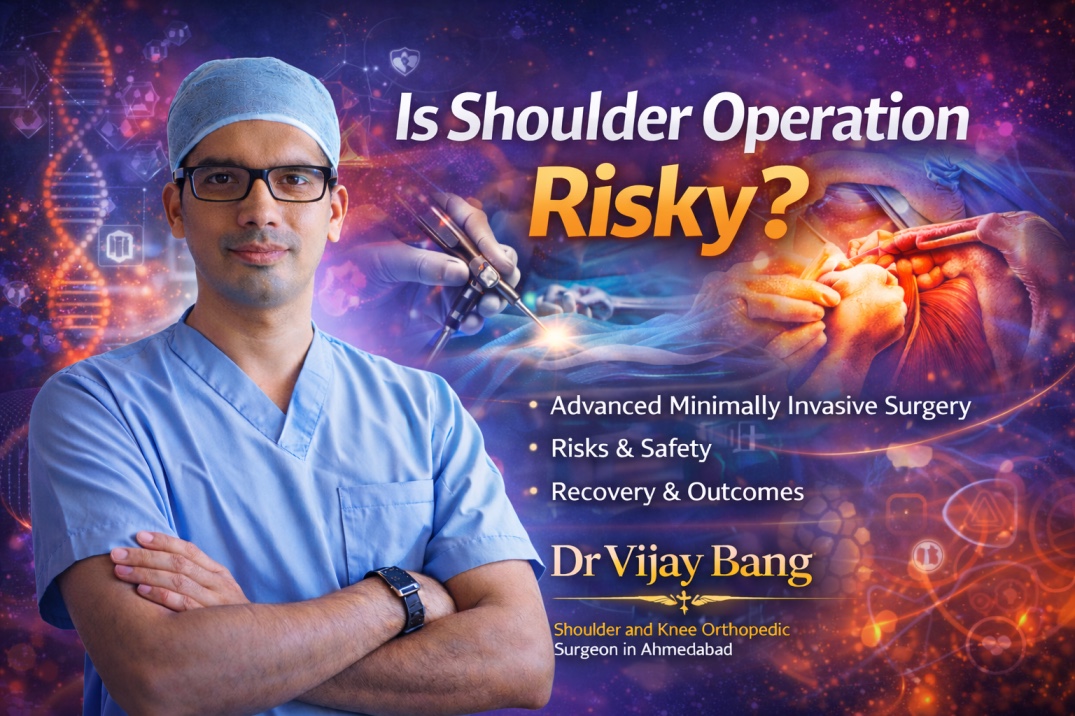
Is Shoulder Operation Risky
In modern orthopedic practice, shoulder surgery is considered relatively safe.
Research involving more than 260,000 patients found that only about 1.2% experienced complications within 90 days of arthroscopic shoulder surgery, which is a very low rate.
This means:
- More than 98% of patients do not develop serious complications.
Advances that have improved safety include:
- Arthroscopic (keyhole) surgery
- Better anesthesia
- Improved surgical instruments
- Advanced imaging like MRI
- Structured rehabilitation programs
However, like any surgery, shoulder operations do carry some risks.
What Are the Most Common Risks of Shoulder Surgery
Although uncommon, possible complications include:
Infection
Rare but possible after any surgery.
Risk rate: around 0.1–0.2% in shoulder arthroscopy.
Shoulder stiffness
Some patients may experience reduced motion after surgery.
Re-tear of repaired tendon
Possible in large rotator cuff tears.
Nerve injury
Very rare but possible.
Blood clots
Pulmonary embolism occurs in around 0.1% of patients.
Need for another surgery
About 1 in 26 patients may require another procedure within a year due to various reasons.
Fortunately, serious complications are uncommon.
Is Arthroscopic Shoulder Surgery Safer Than Open Surgery
Yes.
Arthroscopy (keyhole surgery) has significantly improved patient safety.
Advantages include:
- Smaller incisions
- Less muscle damage
- Less blood loss
- Reduced infection risk
- Faster recovery
- Shorter hospital stay
Most shoulder surgeries today are performed arthroscopically.
What Conditions Require Shoulder Surgery
Shoulder surgery may be recommended for:
Rotator cuff tears
Torn tendons that cause pain and weakness.
Recurrent shoulder dislocation
Repeated episodes of shoulder coming out of the joint.
Frozen shoulder not responding to treatment
Shoulder arthritis
Shoulder fractures
Labral tears (Bankart lesion)
Surgery is usually recommended when non-surgical treatments fail.
Is Rotator Cuff Surgery Risky
Rotator cuff repair is one of the most commonly performed shoulder surgeries.
In experienced hands:
- Success rate is high
- Complications are uncommon
- Most patients regain pain relief and improved function
Risks increase when:
- Tear is very large
- Patient delays surgery for years
- Muscle degeneration has occurred
Early evaluation improves outcomes.
Is Shoulder Dislocation Surgery Safe
Surgery for recurrent shoulder instability is usually performed through arthroscopic Bankart repair or Latarjet procedure.
These surgeries aim to restore stability and prevent repeated dislocations.
When done by an experienced surgeon:
- Success rate is high
- Athletes often return to sports
- Shoulder stability improves significantly
What Are the Risk Factors That Increase Surgical Complications
Certain factors may increase risk:
- Age above 60
- Smoking
- Diabetes
- Lung disease
- Poor overall health
- Long surgical time
- Severe shoulder damage
Studies show older patients and smokers have higher complication risk.
This is why proper preoperative evaluation is important.
Is Shoulder Surgery Painful
Modern anesthesia and pain control techniques have improved patient comfort.
During surgery:
- Patient is under anesthesia
- No pain is felt
After surgery:
- Mild to moderate pain is expected
- Pain medications control symptoms
- Pain usually decreases significantly within days
Many patients report that pre-surgery pain was worse than post-surgery pain.
How Long Does Shoulder Surgery Take
Typical surgery time:
- Arthroscopic rotator cuff repair: 60–120 minutes
- Shoulder stabilization surgery: 60–90 minutes
- Shoulder replacement: 1.5–2 hours
Most patients go home the same day or next day.
What Is the Recovery Time After Shoulder Surgery
Recovery occurs in stages:
First 4 weeks
Sling protection.
4–8 weeks
Gentle movement begins.
8–16 weeks
Strengthening exercises.
4–6 months
Return to most activities.
Athletes may take 6–9 months to return to sports.
Can Shoulder Surgery Fail
Yes, but failure rates are relatively low.
Possible reasons include:
- Large rotator cuff tears
- Early heavy activity
- Poor rehabilitation
- Smoking
- Severe tissue damage
Choosing the right surgeon significantly improves success.
Can Shoulder Surgery Be Avoided
In some cases yes.
Many shoulder conditions improve with:
- Physiotherapy
- Medications
- Activity modification
- Injections
However, certain problems require surgery:
- Complete rotator cuff tear
- Recurrent dislocation
- Severe arthritis
- Major structural damage
Delaying surgery may worsen the condition.
What Should Patients Do Before Shoulder Surgery
Preparation improves safety.
Recommended steps:
- Control diabetes
- Stop smoking
- Maintain good nutrition
- Discuss medications with doctor
- Complete necessary imaging tests
- Understand rehabilitation plan
Patient participation plays a big role in recovery.
What Makes Shoulder Surgery Safer
Safety improves when:
- Surgery is done by shoulder specialist
- Accurate diagnosis is made
- Arthroscopic techniques are used
- Hospital infection control is strong
- Rehabilitation protocol is followed
Experience of the surgeon matters greatly.
When Should You See a Shoulder Specialist
Consult a specialist if you have:
- Shoulder pain lasting more than 3 weeks
- Recurrent shoulder dislocation
- Weakness lifting the arm
- Night pain
- Failed physiotherapy
Early diagnosis prevents complications.
Final Answer: Is Shoulder Operation Risky
Modern shoulder surgery is generally safe and highly effective.
Large research studies show complication rates around 1–2%, meaning most patients undergo surgery without serious problems.
The biggest factors affecting safety are:
- Correct diagnosis
- Timing of surgery
- Experience of the surgeon
- Patient’s overall health
With proper planning and expert care, shoulder surgery can dramatically improve pain, function, and quality of life.
Why Select Dr Vijay Bang for Shoulder Surgery in Ahmedabad
Choosing the right surgeon is one of the most important decisions for shoulder treatment.
Patients trust Dr Vijay Bang because of:
- Exclusive focus on shoulder and knee surgeries
- Expertise in arthroscopic shoulder procedures
- Evidence-based treatment approach
- Honest advice — surgery only when necessary
- Detailed patient counseling
- Modern minimally invasive techniques
- Structured post-surgery rehabilitation guidance
- Experience treating athletes and complex shoulder conditions
If you are searching for:
- Shoulder surgeon in Ahmedabad
- Rotator cuff surgeon in Ahmedabad
- Shoulder dislocation specialist in Ahmedabad
- Shoulder arthroscopy surgeon
A proper evaluation can help you choose the safest treatment option.
Dr Vijay Bang
Shoulder and Knee Orthopedic Surgeon in Ahmedabad
www.drvijaybang.com
Call / WhatsApp: +91 8129272101
(Share your report on WhatsApp for trustworthy honest opinion)
Stay Connected with Dr Vijay Bang for Regular Health Tips:
Instagram https://www.instagram.com/drvijaybangortho
YouTube https://www.youtube.com/@drvijaybangortho
Facebook https://www.facebook.com/drvijaybangortho
LinkedIn https://www.linkedin.com/in/drvijaybangortho/