Introduction
Shoulder surgeries—whether arthroscopy or replacement—require careful pre-operative evaluation to ensure safety and optimal outcomes. One frequently overlooked but clinically critical condition is:
👉 Urinary Tract Infection (UTI)
Many patients are surprised when their surgery gets postponed due to a urine infection.
👉 “Doctor, my problem is in the shoulder… why is urine infection important?”
The answer is simple but extremely important:
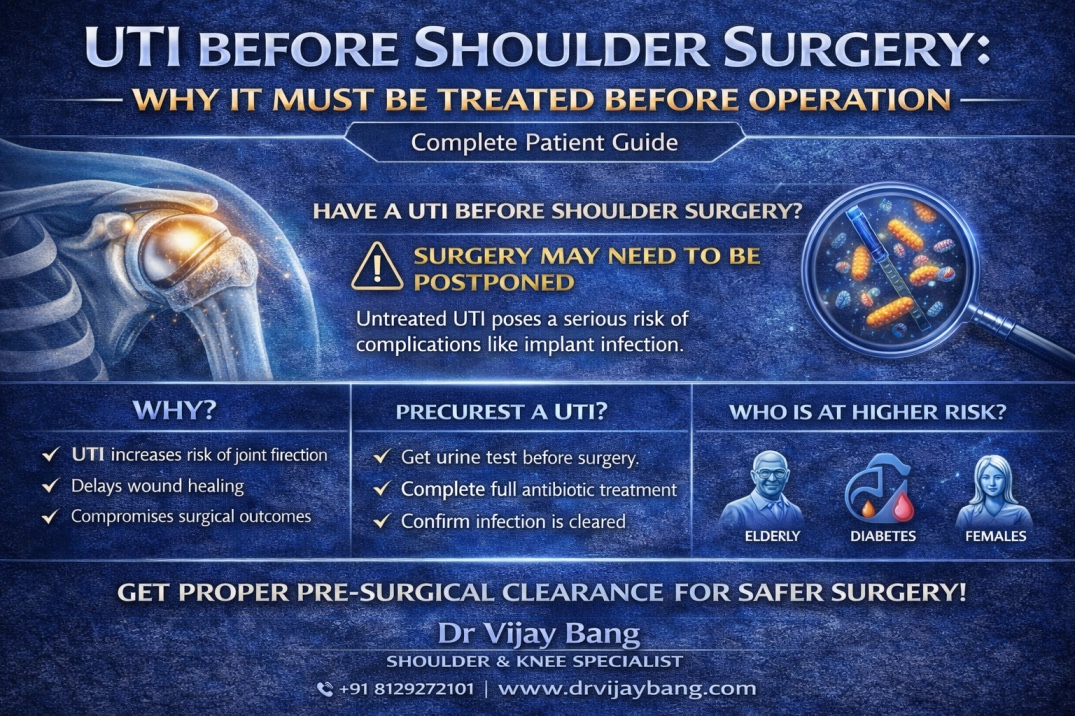
⚠️ An untreated UTI can increase the risk of serious complications after surgery—including infection of the operated joint.
This article explains:
- Why UTI matters before shoulder surgery
- When surgery should be delayed
- Risks of ignoring UTI
- Complete prevention and management strategy
Section 1: What is a UTI and Why Does It Matter Before Surgery?
What is a UTI?
A UTI is an infection of the urinary system, commonly affecting the bladder. It is usually caused by bacteria like E. coli.
Why is UTI important before shoulder surgery?
Even though the infection is not in the shoulder:
👉 Bacteria can enter the bloodstream and spread to other parts of the body.
This can lead to:
- Surgical site infection
- Implant infection (in case of joint replacement)
- Delayed healing
Can a simple UTI affect shoulder surgery outcomes?
Yes.
👉 Especially in procedures involving implants, such as:
- Shoulder replacement
- Reverse shoulder replacement
Even a minor infection can lead to major complications.
Section 2: How UTI Can Affect Shoulder Surgery
1. Risk of joint infection
One of the most serious complications is:
- Infection of the shoulder joint after surgery
👉 This may require:
- Prolonged antibiotics
- Repeat surgery
- Implant removal in severe cases
2. Poor wound healing
Infection in the body:
- Delays healing
- Increases inflammation
3. Increased hospital stay
Patients may require:
- Additional monitoring
- IV antibiotics
4. Systemic infection (Sepsis)
In rare cases:
- Infection can spread throughout the body
👉 This can be life-threatening
Section 3: Should Surgery Be Postponed if UTI is Present?
Is it safe to operate with a UTI?
👉 No.
Elective shoulder surgery should be postponed if:
- Active UTI is present
- Urine test shows infection
Why delay surgery?
Because:
- Treating infection first reduces complications
- Ensures better surgical outcomes
Are there exceptions?
Emergency surgeries may proceed with precautions, but:
👉 Elective shoulder surgeries should always be delayed
Section 4: Symptoms of UTI Before Surgery
What symptoms should patients watch for?
- Burning while urinating
- Frequent urination
- Lower abdominal pain
- Fever
- Foul-smelling urine
Can UTI be present without symptoms?
Yes.
👉 This is called asymptomatic bacteriuria
Important in:
- Elderly patients
- Diabetics
Section 5: Pre-Operative Screening for UTI
Is urine testing mandatory before shoulder surgery?
In many cases, yes—especially for:
- Elderly patients
- Diabetics
- Joint replacement candidates
What tests are done?
1. Urine routine examination
- Detects infection
2. Urine culture
- Identifies bacteria
- Guides antibiotic selection
What if the test is positive?
👉 Surgery is postponed
👉 Antibiotics are started
Section 6: Treatment of UTI Before Surgery
How is UTI treated before shoulder surgery?
1. Antibiotics
- Based on culture sensitivity
2. Hydration
- Flushes bacteria
3. Repeat testing
- Confirms infection is cleared
How long does treatment take?
- Usually 5–7 days
- May vary depending on severity
When can surgery be done after UTI?
👉 Only after:
- Symptoms resolve
- Urine tests become normal
Section 7: Risk Factors for Pre-Operative UTI
Who is at higher risk?
1. Diabetes
- High sugar promotes infection
2. Elderly patients
3. Female patients
4. Poor hygiene
5. History of recurrent UTIs
Section 8: Special Considerations in Shoulder Replacement
Why is UTI more dangerous in joint replacement?
Because:
- Implants have no blood supply
- Infection is difficult to treat
What happens if implant gets infected?
May require:
- Implant removal
- Long-term antibiotics
- Revision surgery
Section 9: Prevention Strategies Before Surgery
How to prevent UTI before shoulder surgery?
1. Stay well hydrated
2. Maintain hygiene
3. Control blood sugar
4. Treat any urinary symptoms early
5. Pre-operative screening
Section 10: FAQs
Can I undergo shoulder surgery if I have a UTI?
No, elective surgery should be postponed
How long after UTI can surgery be done?
After complete resolution and normal urine tests
Is UTI common before surgery?
Not very common, but screening is important
Can untreated UTI cause surgery failure?
Yes, especially in joint replacement
Do all patients need urine tests before surgery?
Not all, but high-risk patients should be tested
Section 11: When to Consult a Doctor
Consult immediately if:
- Urinary symptoms present before surgery
- Fever or discomfort
- Previous UTI history
Section 12: Why Proper Pre-Operative Evaluation Matters
Importance of pre-surgical clearance
- Reduces complications
- Improves outcomes
- Ensures safety
Section 13: Why Choose Dr. Vijay Bang
- Specialized in shoulder surgeries
- Focus on complication prevention
- Evidence-based pre-operative protocols
- Patient-first approach
Conclusion
👉 UTI before shoulder surgery is not a minor issue—it is a critical factor that must be addressed.
Ignoring it can lead to:
- Surgical complications
- Implant infection
- Poor outcomes
The key message:
✔ Screen early
✔ Treat completely
✔ Operate safely
Dr Vijay Bang
Shoulder and Knee Orthopedic Surgeon in Ahmedabad
www.drvijaybang.com
Call/whatsapp – +91 8129272101
(share your report on WhatsApp for trustable honest opinion)
Stay Connected with Dr. Vijay Bang for Regular Health Tips:
Instagram: https://www.instagram.com/drvijaybangortho
YouTube: https://www.youtube.com/@drvijaybangortho
Facebook: https://www.facebook.com/drvijaybangortho
Linkedin: https://www.linkedin.com/in/drvijaybangortho/

Keywords
UTI before surgery
urinary infection before shoulder surgery
pre operative UTI management
shoulder replacement infection risk
UTI and joint replacement
can surgery be done with UTI
pre surgical infection screening
orthopedic surgery precautions