Shoulder pain is one of the most common complaints in active individuals, gym-goers, and even office workers. Among the many causes, a small focal rotator cuff tear is often missed or ignored—leading to worsening pain and bigger problems later.
But the good news is:
👉 If detected early, most small tears can be treated without surgery.
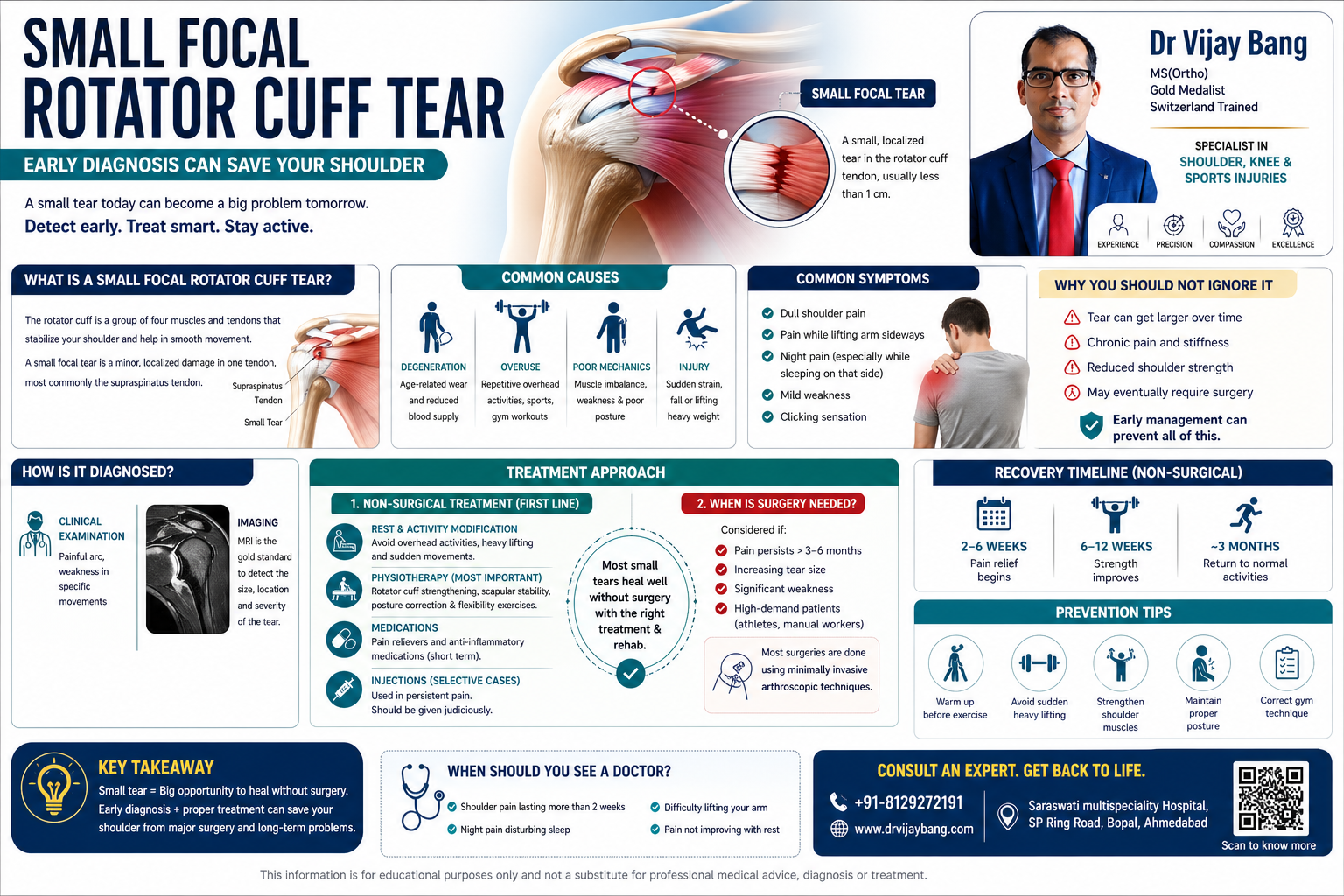
What is a Small Focal Rotator Cuff Tear?
The rotator cuff is a group of four muscles and tendons that stabilize your shoulder and allow smooth movement.
A small focal tear means:
- A minor, localized damage in one tendon
- Usually involves the supraspinatus tendon
- Tear size is small (often <1 cm)
- Can be partial thickness or early full-thickness
Why Do These Tears Occur?
🔹 1. Degeneration (Most Common)
- Age-related wear and tear
- Reduced blood supply
🔹 2. Overuse & Repetitive Activity
- Gym workouts (especially overhead lifts)
- Sports like cricket, badminton
🔹 3. Poor Shoulder Mechanics
- Weak muscles
- Imbalance in movement
🔹 4. Injury or Sudden Strain
- Lifting heavy weight
- Fall on shoulder
Common Symptoms
Small tears don’t always cause severe pain initially, which is why they are often ignored.
⚠️ Watch for:
- Dull shoulder pain
- Pain while lifting arm sideways
- Night pain (especially while sleeping on that side)
- Mild weakness
- Clicking sensation
👉 Many patients say:
“Pain is there, but I can still manage.”
This is exactly the stage where early treatment works best.
Why You Should NOT Ignore It
A small focal tear can:
❌ Progress into a large tear
❌ Cause chronic pain
❌ Lead to shoulder stiffness
❌ Ultimately require surgery
👉 Early management can prevent all of this.
How is it Diagnosed?
🩺 Clinical Examination
- Painful arc
- Weakness in specific movements
🧠 Imaging
- MRI is the gold standard
- Shows size, location, and severity
Treatment of Small Focal Rotator Cuff Tear
✅ 1. Non-Surgical Treatment (First Line in Most Cases)
✔ Rest & Activity Modification
Avoid:
- Overhead lifting
- Heavy gym exercises
✔ Physiotherapy (Most Important)
Focus on:
- Rotator cuff strengthening
- Scapular stability
- Posture correction
✔ Medications
- Short-term pain relief (if needed)
✔ Injections (Selective Cases)
- Used in persistent pain
- Must be done carefully
❗ 2. When is Surgery Needed?
Surgery is considered if:
- Pain persists >3–6 months
- Increasing tear size
- Significant weakness
- High-demand patients (athletes)
Most procedures are done via:
👉 Minimally invasive arthroscopy
Recovery Timeline
- Pain relief: 2–6 weeks
- Strength improvement: 6–12 weeks
- Full recovery: ~3 months
👉 With proper rehab, most patients return to normal activity without surgery.
Prevention Tips
✔ Warm up before exercise
✔ Avoid sudden heavy lifting
✔ Strengthen shoulder muscles
✔ Maintain proper posture
✔ Correct gym technique
Key Takeaway
👉 Small tear = Big opportunity to heal without surgery
If you ignore it:
➡ It becomes a bigger tear
➡ Treatment becomes more complex
If you treat early:
➡ Faster recovery
➡ Avoid surgery
➡ Better long-term shoulder function
When Should You See a Doctor?
- Shoulder pain lasting >2 weeks
- Night pain disturbing sleep
- Difficulty lifting arm
- Pain not improving with rest
Conclusion
A small focal rotator cuff tear is not a serious condition—if treated at the right time.
The problem is not the tear…
👉 The problem is delay.
Early diagnosis + proper physiotherapy can save your shoulder from major surgery.