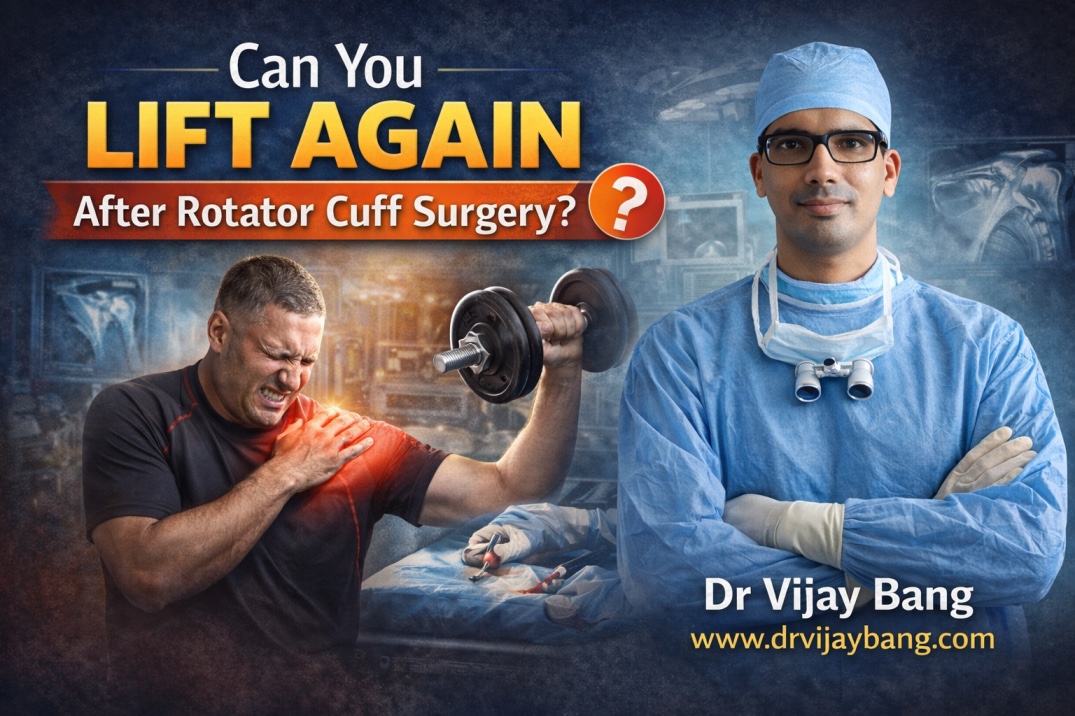
Dr Vijay Bang, top rated shoulder surgeon in Ahmedabad gives Complete Guide for Patients Recovering from Rotator Cuff Repair
Rotator cuff injuries are among the most common causes of shoulder pain and weakness. Many patients who undergo rotator cuff surgery have one major concern:
“Will I be able to lift again after surgery?”
This question is especially important for people who lift weights, perform manual work, play sports, or simply want to regain normal shoulder strength for daily activities.
The good news is that most patients can lift again after rotator cuff surgery. However, the timeline, amount of weight, and type of lifting depend on several important factors such as the size of the tear, quality of the tendon repair, rehabilitation process, and adherence to medical advice.
This comprehensive guide answers the most common questions about lifting after rotator cuff surgery, helping patients understand what to expect and how to safely regain strength.
This article is meant for:
- Patients planning rotator cuff surgery
- Individuals recovering after shoulder surgery
- Athletes and gym-goers worried about lifting again
- People with physically demanding jobs
Understanding Rotator Cuff Surgery
The rotator cuff consists of four muscles and tendons that stabilize the shoulder joint and help lift and rotate the arm.
These muscles include:
- Supraspinatus
- Infraspinatus
- Teres minor
- Subscapularis
When these tendons tear, patients often experience:
- Shoulder pain
- Weakness
- Difficulty lifting the arm
- Night pain
- Reduced shoulder function
When conservative treatment fails, doctors may recommend rotator cuff repair surgery. Most modern surgeries are performed using minimally invasive arthroscopic techniques, which allow faster recovery and smaller scars.
Frequently Asked Questions About Lifting After Rotator Cuff Surgery
Can you lift weights again after rotator cuff surgery?
Yes, most patients can return to lifting weights after rotator cuff surgery.
However, this must be done gradually and under proper guidance. The repaired tendon needs time to heal to the bone, which usually takes several months.
Patients generally follow a structured rehabilitation program that includes:
- Immobilization phase
- Passive motion exercises
- Active strengthening
- Gradual return to lifting
With proper healing and rehabilitation, many individuals can safely resume weight training.
How long after rotator cuff surgery can you lift weights?
Most patients can begin light lifting between 3 and 4 months after surgery, depending on the healing progress.
Typical recovery timeline:
First 6 weeks
- Arm kept in sling
- No lifting
- Only passive movement exercises
6–12 weeks
- Gentle active movements
- Physiotherapy begins
3–4 months
- Light strengthening exercises
- Small weights introduced
5–6 months
- Gradual return to gym training
6–9 months
- Return to heavier lifting if tendon healing is strong
Every patient heals differently, so the exact timeline may vary.
What is the maximum weight you can lift after rotator cuff surgery?
The maximum weight a person can lift depends on:
- Size of the tear
- Surgical repair quality
- Muscle strength
- Rehabilitation progress
- Age and overall health
Many patients eventually return to moderate to heavy lifting, especially if the repair was successful and rehabilitation was followed properly.
However, extremely heavy lifting or poor lifting technique can increase the risk of re-tearing the tendon.
Can athletes return to weight training after rotator cuff surgery?
Yes.
Many athletes successfully return to weight training after rotator cuff surgery.
However, they must follow a gradual progression program.
Important principles include:
- Start with resistance bands
- Focus on rotator cuff strengthening
- Avoid heavy overhead lifting initially
- Maintain proper shoulder mechanics
Athletes who follow a structured rehabilitation program often regain excellent shoulder strength.
When can you return to the gym after rotator cuff surgery?
Most patients can return to the gym around 4 to 6 months after surgery.
However, gym activity initially focuses on:
- Lower body exercises
- Core strengthening
- Cardio training
Shoulder strengthening begins gradually under physiotherapy guidance.
Heavy upper body exercises should be delayed until the tendon has healed properly.
What exercises should be avoided after rotator cuff surgery?
Certain exercises may place excessive stress on the repaired tendon.
These should be avoided early in recovery:
- Heavy bench press
- Overhead military press
- Heavy shoulder press
- Sudden jerking movements
- Pull-ups or chin-ups early after surgery
Once the shoulder has healed completely, some of these exercises may be reintroduced carefully.
Can you re-tear your rotator cuff after surgery?
Yes, it is possible to re-tear the rotator cuff tendon after surgery.
Risk factors include:
- Lifting heavy weights too early
- Poor rehabilitation
- Large initial tear
- Poor tendon quality
- Trauma or fall
Following your surgeon’s rehabilitation protocol significantly reduces the risk of re-injury.
Can manual labor workers return to heavy lifting after rotator cuff surgery?
Many manual labor workers successfully return to work after rotator cuff surgery.
However, the timeline may be longer compared to desk workers.
Typical return-to-work timeline:
- Light duties: 3–4 months
- Moderate lifting: 4–6 months
- Heavy labor: 6–9 months
A gradual return helps protect the healing tendon.
Will my shoulder ever be as strong as before surgery?
In many cases, patients regain near-normal shoulder strength after rotator cuff surgery.
However, several factors influence final strength:
- Size of tear
- Duration of injury before surgery
- Muscle degeneration
- Quality of rehabilitation
Patients who follow physiotherapy carefully often achieve excellent results.
How can you safely return to lifting after rotator cuff surgery?
Safe return to lifting involves several key principles.
Follow physiotherapy strictly
Rehabilitation exercises help restore:
- Range of motion
- Muscle strength
- Shoulder stability
Progress gradually
Start with:
- Resistance bands
- Light dumbbells
- Controlled movements
Focus on rotator cuff strengthening
Strengthening the small stabilizing muscles helps protect the shoulder joint.
Maintain proper lifting technique
Incorrect form can overload the shoulder and increase injury risk.
Tips for Protecting Your Shoulder After Surgery
Patients should follow several long-term precautions:
- Warm up before workouts
- Avoid sudden heavy lifting
- Strengthen shoulder stabilizers
- Maintain good posture
- Avoid repetitive overhead strain
These habits help maintain shoulder health and reduce the risk of future injuries.
Signs You Should See Your Surgeon During Recovery
If you experience any of the following symptoms after surgery, consult your surgeon:
- Sudden increase in shoulder pain
- Loss of strength
- Shoulder instability
- Difficulty lifting the arm
- Popping or tearing sensation
Early evaluation helps detect potential complications.
Why Early and Expert Treatment Matters
Rotator cuff tears often worsen over time if untreated. Early diagnosis and appropriate treatment help preserve shoulder function and prevent permanent weakness.
Modern arthroscopic surgery combined with structured rehabilitation allows most patients to return to normal activities, sports, and lifting.
Why Many Patients Choose Dr Vijay Bang for Rotator Cuff Surgery
Choosing the right surgeon plays a crucial role in recovery and long-term shoulder function.
Many patients choose Dr Vijay Bang for shoulder surgery because of:
- Specialization in shoulder and knee orthopedic surgery
- Expertise in arthroscopic rotator cuff repair
- Patient-centered treatment approach
- Clear explanation of treatment options
- Focus on advanced minimally invasive techniques
- Structured rehabilitation guidance for faster recovery
Patients also appreciate receiving honest opinions and clear treatment plans, which helps them make confident healthcare decisions.
Final Thoughts
Yes, most patients can lift again after rotator cuff surgery, but patience and proper rehabilitation are essential.
The healing process takes time, and rushing back to heavy lifting too soon can jeopardize the surgical repair.
By following medical advice, engaging in physiotherapy, and gradually rebuilding strength, many individuals regain excellent shoulder function and return to their favorite activities—including weight lifting and sports.
If you are experiencing persistent shoulder pain or weakness, early consultation with a shoulder specialist can help identify the problem and guide the best treatment plan.
Dr Vijay Bang
Shoulder and Knee Orthopedic Surgeon in Ahmedabad
www.drvijaybang.com
Call/whatsapp – +91 8129272101
(share your report on WhatsApp for trustable honest opinion)
Stay Connected with Dr. Vijay Bang for Regular Health Tips:
Instagram: https://www.instagram.com/drvijaybangortho
YouTube: https://www.youtube.com/@drvijaybangortho
Facebook: https://www.facebook.com/drvijaybangortho
Linkedin: https://www.linkedin.com/in/drvijaybangortho/