
Why Does My Knee Swell After Exercise?
Introduction
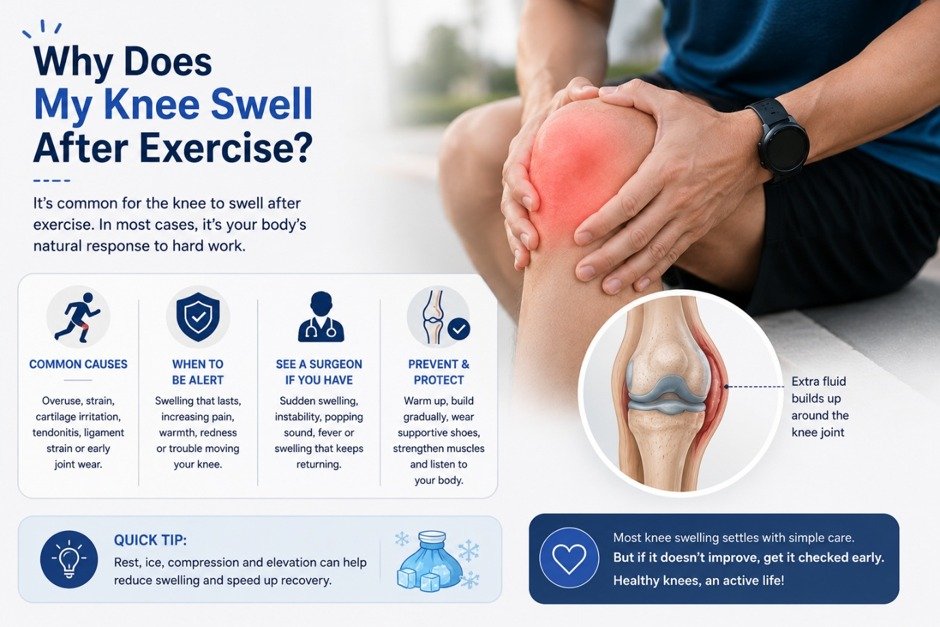
If you’ve ever finished a workout and noticed your knee looking puffier than usual, you’re not alone. Knee swelling after exercise is one of the most common concerns people bring up with their doctors, whether they’re weekend joggers or dedicated athletes. In most cases, it’s simply your body reacting to hard work rather than a sign of a serious problem. Still, understanding why it happens, and when to pay closer attention, can save you a lot of unnecessary worry.
What Causes Knee Swelling After Exercise?
Your knee does a lot of heavy lifting, literally. It absorbs impact, bends and straightens thousands of times a day, and supports your full body weight with every step you take. When you push it during exercise, especially running, squatting, or jumping, the tissues around the joint can become irritated. Your body responds the way it always does to irritation: by sending extra fluid to the area to cushion and protect it.
What Are the Most Common Culprits?
- Overuse or repetitive strain from doing too much activity too soon
- Meniscus irritation, meaning small tears or wear in the cushioning cartilage
- Patellar tendinitis, or inflammation of the tendon linking the kneecap to the shin
- Ligament strain from sudden twists or awkward landings
- Early joint wear or arthritis, more common after age 40 or past injuries Doctors sometimes call this fluid buildup an “effusion.” It simply means extra fluid has collected inside or around the joint.
Is Some Swelling Normal, or Should You Be Concerned?
Mild swelling after a tough workout usually isn’t cause for alarm. It often fades within a day or two of rest. Think of it as your knee’s way of saying that was a lot of work.
That said, a few patterns suggest something more is going on:
- Swelling that lingers beyond two or three days
- Pain that’s sharp or getting worse, not better
- A knee that feels warm, red, or unsteady
- Trouble fully bending or straightening the leg If any of this sounds familiar, it’s worth having it looked at rather than waiting it out
When Should You See a Surgeon for Knee Swelling?
It’s tempting to write off knee swelling as just part of staying active. But certain signs deserve a professional opinion sooner rather than later:
- Sudden, significant swelling right after an injury
- Trouble putting weight on the leg
- A popping sound at the moment it happened
- Fever alongside a hot, swollen joint
- Swelling that keeps coming back after every session
These symptoms don’t always point to something serious. But catching issues like ligament tears or joint infections early makes treatment far more straightforward
How Can You Prevent Knee Swelling After Exercise?
Once the swelling settles down, the goal shifts to keeping it from coming back. A few consistent habits go a long way:
- Warm up before activity and cool down afterward
- Build up intensity gradually instead of all at once
- Wear shoes that actually support your feet and stride
- Strengthen the muscles around the knee, especially the quads and hamstrings
- Pay attention when something feels off, and rest before it becomes a bigger issue Small changes like these add up over months of training.
A Final Word
Knee swelling after exercise is common, and for most people, it settles down with a little rest and basic care. But your knees carry you through everyday life, so swelling that lingers or keeps returning deserves real attention, not guesswork. If your symptoms aren’t improving, it’s worth talking to a specialist who can look closer and guide your recovery. Dr. Vijay Bang often tells his patients that catching small joint problems early is the simplest way to stay active and pain-free for years to come. If your knee hasn’t settled down on its own, consider consulting a specialist for Knee Arthroscopy in Ahmedabad to get a clearer diagnosis and a treatment plan built around you.