
Author name: Dr Vijay Bang

Orthopedic

Can Weight Loss Help Reduce Knee Pain?

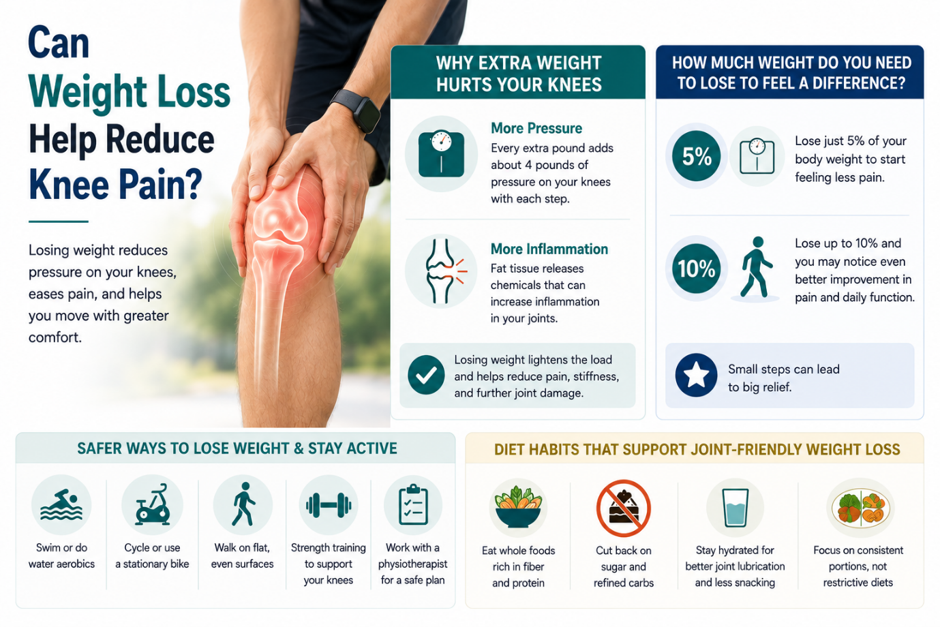
Can Weight Loss Help Reduce Knee Pain? Introduction If your knees ache more on days when you’ve gained a little weight, or feel easier when you’ve slimmed down, you’re picking up on something real, not just a coincidence. Can weight loss help reduce knee pain? For most people carrying extra weight, the answer is a clear yes. Every pound your body carries adds real pressure to your knees with every step, every stair, and every squat. The good news is that even modest changes on the scale can translate into noticeably less pain and more freedom of movement. Why Does Extra Body Weight Put So Much Strain on Your Knees? Your knees are weight-bearing joints, which means they absorb force every time you stand, walk, or climb. For every pound of body weight, your knees feel roughly four pounds of pressure with each step, and even more going up or down stairs. Carry a little extra weight, and that pressure adds up fast, gradually wearing down the cartilage that cushions the joint. It’s Not Just About Extra Pressure Mechanical strain – more body weight means more direct load on the knee joint with every movement  Increased inflammation – fat tissue releases chemical messengers that can quietly stoke inflammation in your joints, adding to pain and stiffness Can Weight Loss Help Reduce Knee Pain? Yes, and often more than people expect. Research on knee osteoarthritis consistently shows that losing weight reduces pain, improves mobility, and can even slow further joint damage. It isn’t about reaching some ideal number on the scale. It’s about lightening the everyday load your knees carry. How Much Weight Do You Need to Lose to Feel a Difference? You don’t need a dramatic transformation to notice relief. Losing just 5% of your body weight can meaningfully ease knee pain for many people. Get closer to 10%, and the improvement in pain and daily function tends to be even more noticeable. Think of it less as a finish line and more as steady progress your joints will thank you for. What’s the Safest Way to Lose Weight When Your Knees Already Hurt? This is often where people get stuck. Exercise supports weight loss, but high-impact workouts can aggravate an already sore knee. The trick is choosing movement that helps you lose weight without adding unnecessary strain. Gentler Ways to Stay Active Swimming or water aerobics, since water supports your body weight  Cycling or using a stationary bike  Walking on flat, even surfaces  Strength training to build support around the knee  Working with a physical therapist to design a safe routine Simple Diet Habits That Support Joint-Friendly Weight Loss Choose whole foods rich in fiber and protein to stay fuller for longer  Cut back on processed sugar and refined carbs, which can fuel inflammation  Stay well hydrated, since water supports joint lubrication and curbs unnecessary snacking  Focus on consistent portions rather than restrictive diets that are hard to sustain Getting this process right matters, but it’s only part of the bigger picture. Is Weight Loss Enough on Its Own? For many people with mild to moderate knee pain, weight loss alone brings real relief. But if cartilage damage is more advanced, weight loss works best alongside other treatments, such as physical therapy, anti-inflammatory medication, or in some cases, injections or surgery. Dr. Vijay Bang, a practicing orthopedic surgeon in Ahmedabad, often sees this play out in his clinic patients who pair steady weight management with the right medical support tend to recover their mobility faster than those relying on just one approach. Losing weight doesn’t replace these options. It often makes them work better. The Bottom Line Weight loss can genuinely help reduce knee pain, often more than people expect. Carrying extra weight puts real, measurable strain on your knees, but the reverse is just as true: losing even a modest amount can ease pain, protect your joints, and help you move more freely again. Small, sustainable changes matter more than quick fixes here. Dr. Vijay Bang encourages patients to focus on gradual, joint-friendly progress rather than chasing a number on the scale. If knee pain has been holding you back, consulting a specialist for Knee Care in Ahmedabad can help you find a safe, realistic plan that fits your body and your goals.
Orthopedic

Why Do My Joints Hurt After Waking Up?

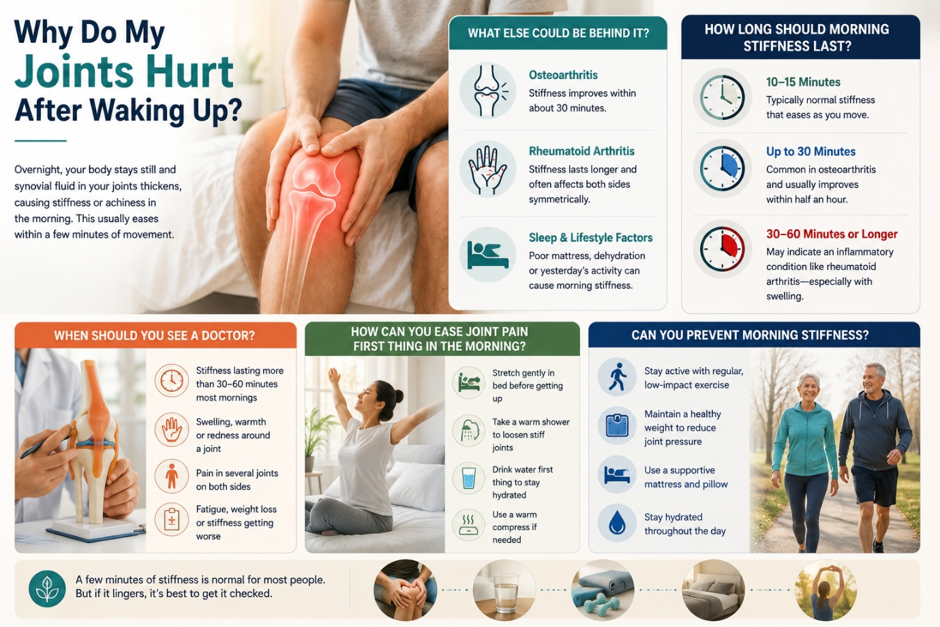
Why Do My Joints Hurt After Waking Up? Introduction Waking up and needing a minute before your knees, hips, or fingers move the way they should is far more common than most people realize. If you’ve ever rolled out of bed feeling stiffer than when you went to sleep, you’ve probably wondered why your joints hurt after waking up in the first place. For many people, this is a normal, harmless part of how joints work overnight. For others, it can be an early clue that something else needs attention. Either way, understanding what’s actually happening can help you feel less worried and more in control. Why Do My Joints Hurt After Waking Up? While you sleep, your body stays still for hours at a time. Joints rely on movement to keep a natural lubricant called synovial fluid circulating smoothly. Without regular motion, this fluid thickens slightly overnight, a bit like syrup left in the fridge. That’s why your joints can feel tight, achy, or stiff the moment you start moving again. Doctors sometimes call this the “gel phenomenon,” and for most healthy joints, it eases within a few minutes. What Else Could Be Behind It? Osteoarthritis, where worn cartilage tends to cause stiffness that fades within about 30 minutes Rheumatoid arthritis, an autoimmune condition where stiffness often lasts much longer and affects joints more symmetrically Sleeping position or an unsupportive mattress, which can leave certain joints compressed overnight Mild dehydration, since joints and the cartilage cushioning them rely on fluid too Yesterday’s activity catching up with you, especially after an unusually demanding day How Long Should Morning Joint Stiffness Last? This is where timing becomes a useful clue. If your stiffness fades within 10 to 15 minutes of moving around, that’s typically considered normal. Stiffness from osteoarthritis usually settles within about half an hour. But if your joints stay stiff for 30 to 60 minutes or longer, especially alongside swelling, it’s worth paying closer attention, since this pattern is more typical of inflammatory conditions like rheumatoid arthritis. None of this means something serious is guaranteed, but noticing the pattern helps you and your doctor figure out what’s really going on. When Should You See a Doctor About Morning Joint Pain? A little morning stiffness rarely needs medical attention. But certain patterns are worth mentioning to your doctor:  Stiffness lasting more than 30 to 60 minutes on most mornings Visible swelling, warmth, or redness around a joint Pain affecting several joints on both sides of your body Ongoing fatigue or unexplained weight loss alongside joint symptoms Stiffness that keeps getting worse over several weeks None of these guarantee a serious diagnosis, but they’re worth ruling out early. If these symptoms are becoming frequent or affecting your daily activities, consulting an orthopedic surgeon in Ahmedabad, such as Dr. Vijay Bang, can help identify the underlying cause and guide you toward the appropriate treatment. How Can You Ease Joint Pain First Thing in the Morning? Small changes to your morning routine can make a real difference.  Stretch gently while still in bed, before standing up  Take a warm shower to loosen stiff joints quickly Drink a glass of water first thing, since overnight dehydration can worsen stiffness Use a warm compress on particularly stubborn joints Ease into movement rather than rushing straight into a full workout Can You Prevent Morning Stiffness From Coming Back? Long-term prevention usually comes down to keeping your joints consistently active and supported.  Stay active with regular, low-impact exercise like walking or swimming  Maintain a healthy weight to reduce pressure on weight-bearing joints Choose a supportive mattress and pillow suited to your sleep position Stay hydrated throughout the day, not just in the morning Keep up with any treatment plan your doctor has already recommended The Takeaway Joints hurting after waking up is common, and for most people, it’s simply a sign that they need a few minutes to warm up. But when stiffness lingers, worsens, or comes with swelling, it deserves a proper look rather than being brushed aside. Dr. Vijay Bang reminds patients that identifying the cause early often makes treatment simpler and far more effective. If your mornings have been harder than they should be, reaching out to your doctor is a good next step toward waking up feeling like yourself again.